The Bible and Race. Tim Keller writes “The gospel-analysis of the roots of racism and its healing is sorely missing in much of the conversation about race at present.”
George Floyd and Me. Shai Linne writes “Though I’m deeply grieved, I am not without hope. Personally, I have little confidence in our government or policymakers to change the systemic factors that contributed to the George Floyd situation. But my hope isn’t in the government. My hope is in the Lord.”
How Can We Be Agents of Racial Reconciliation? Russell Gehrlein shares what he learned from Benjamin Watson’s book Under Our Skin: Getting Real About Race—And Getting Free From the Fears and Frustrations That Divide Us.
Tim Keller Diagnosed with Pancreatic Cancer. One of my favorite teachers and authors, Tim Keller, has been diagnosed with pancreatic cancer and is beginning chemotherapy treatment in New York City.
Ravi Zacharias (1946–2020) and His Legacy. Alister McGrath writes “Ravi Zacharias will be remembered for his landmark contributions to Christian apologetics, especially his concern to connect the gospel with the life of the mind.”
Ravi Zacharias at Passion 2020. Enjoy this message from Ravi Zacharias, delivered at Passion 2020 in January, as he helps us to see how each of us has a special purpose in this life that has been designed by God.
Ravi Zacharias (1946–2020). Ligonier Ministries writes “We are grateful for the friendship that R.C. Sproul and Ravi Zacharias shared and for the many times Ravi taught at Ligonier conferences. His compelling and winsome defense of the faith will continue to serve people around the world for years to come.”
Memorial Service. You can watch the May 29 memorial service for Ravi Zacharias here. Speakers included Vice President Mike Pence, Lecrae and Tim Tebow.
More Precious Than Praise and Possessions. Praise and possessions — those are two dominant idols of our age. The desire for self-glory and the desire for material wealth. So, what is the Christian’s relationship to the praise of the world and to the possessions of the world? John Piper explained in a helpful sermon on Mark 8: 31-38 at the 2019 Gospel Coalition National Conference in Indianapolis. Listen to the sermon on this episode of the Ask Pastor John podcast.
Broken to Comfort the Broken: How Quadriplegia Prepared Me to Carry Others. Joni Eareckson Tada writes “Whether you’ve struggled through a broken ankle, home, or neck, you may not sit on the sidelines, resting on the comfort God once imparted when you were at your lowest. You have received God’s consolations, and as such, more is expected of you. Your next go-round with affliction will be God’s tap on your shoulder to find those who are hurting more than you, so that you can enable them to deal with their Help make them brave.”
Before Your Suffering Comes: Five Rocks to Put Beneath Your Feet. In this lengthy article, John Piper writes “My aim has been to encourage you in your calling to help people suffer with faith in Christ, by the power of the Spirit, for the glory of God. My main point has been that there are at least five foundation stones that we can put under the feet of our people before the wave of suffering breaks over their heads.”
Where is God in a Coronavirus World? Watch RZIM (Ravi Zacharias International Ministries) President Michael Ramsden and Professor John Lennox discuss Lennox’s new book, Where is God in a Coronavirus World? The event includes a Q&A.
Is God Sovereign Over Viruses? Gene Veith writes “The fallen world is a hard place to live. And yet, God’s sovereignty mitigates that world. Though the bad things that happen are in accord with His sovereign will, He continues to love His creation. The beauties, satisfactions, and pleasures of life are the deeper signs of God’s sovereignty.”
Where Can We Turn in Fearful Times? Leonardo De Chirico writes “In order to deal with fear without succumbing to it, we need to fear God and God alone.”
How Should Christians Respond to Times of Suffering? When crisis strikes, people often say, “I’ll never be the same after this.” The real danger would be that we’re left exactly the same after the dust has settled. From the Ligonier livestream event Made in the Image of God, Sinclair Ferguson examines how Christians should respond to the suffering of the COVID-19 pandemic.
Do We Really Want to Go Back to Normal? Trevin Wax writes “The question we should ask, then, is not when will we get back to normal but should we want to go back to normal? And the follow-up question: What should the new normal be?”
The Coronavirus is a Result of the Fall. Kevin DeYoung writes “The coronavirus is a natural evil, under God’s providential control to be sure, but whose existence is the result of original sin. The root of all human pain and suffering in the world is the rebellion of our first parents—a rebellion that Christ conquered on the cross and will one day wipe away, along with all its sad and sinister effects.”
God Doesn’t Want Us to Sacrifice the Old. Russell Moore writes “This pandemic will change us, change our economy, our culture, our priorities, our personal lives. That we cannot avoid. But let’s remember: One day we will tell our grandchildren how we lived, how we loved, during the Great Pandemic. Let’s respect human life in such a way that we will not be ashamed to tell them the truth.”
Peace in a Pandemic. Listen to this sermon from David Platt from Proverbs 12:25 and Matthew 6:25-34.
Trip Lee on Faith and Healing. On this episode of the Gospel Coalition podcast, Trip Lee encourages Christians to be faithful in their efforts at evangelism and gospel proclamation, in a message that was delivered at the 2019 Gospel Coalition National Conference.
Kick the Bucket List. J.D. Greear writes “What legacy are you leaving? For what kingdom are you leveraging your resources? Do you live as if you believe eternity is real and imminent? Are you teaching your kids to do the same?”
Clinging to God in Grief. In this episode of the Gospel Coalition podcast, Danielle Anderson, Nancy Guthrie, and Vaneetha Risner share their experiences with grief, and the grace they’ve discovered along the way.
Concert Review ~ Ringo Starr and His All-Starr Band at The Fox Theatre in St. Louis
I grew up, and remain, a huge Beatles fan. Though I never saw them perform (they stopped touring in 1966), I have seen Paul McCartney in concert eleven times, the late George Harrison on his only US tour in 1974, and unfortunately never saw John Lennon in concert; he was murdered in 1980. Seeing Ringo Starr in concert was on my “Bucket List”. He tours often with an assortment of artists known as his All-Starr Band. The current lineup has been together for three years, something that hasn’t been done since Ringo started touring with the All-Starr Band back in 1989.
Last Friday when I eventually did see Ringo in concert was one fine day. After stopping at Busch Stadium to get my NLDS t-shirt and having a great lunch at Pappy’s Smokehouse, my favorite place to eat in St. Louis, we checked into the Hotel Ignacio, a small boutique hotel within walking distance of the Fabulous Fox Theatre, where the concert was held.
The Cardinals were opening the NLDS against the Los Angeles Dodgers and the best pitcher in baseball, Clayton Kershaw. I watched the first few innings from the Triumph Restaurant next to the hotel, and Kershaw was dominating, giving the Cardinals only one hit and leading the Dodgers to a 4-1 lead. By the time I found my seat at the Fox a few minutes later, the score was 6-1. I continued to monitor the game throughout the two hour concert, and the Cardinals won in a thriller 10-9.
Ringo, who is 74 years old, was in great physical shape and strong voice on this night in front of an enthusiastic sold-out crowd at the unique Fox Theatre. He opened with “Matchbox” shortly after 8:00 pm, and the night was off and running. The background vocals of the other six members of the band also added much to Ringo’s twelve songs.
The night was equally split between Ringo and the All-Starr Band, which was comprised of Todd Rundgren, Toto’s Steve Lukather on guitar, Mr. Mister bassist Richard Page, Santana/Journey keyboardist Gregg Rolie, drummer Gregg Bisonette and percussionist/saxophonist Warren Ham. Rundgren, Lukather, Page and Rolie each did three of their songs, in addition to Ringo’s twelve songs, Beatles and solo songs.
It was obvious that Ringo and the entire band are enjoying what they are doing on this tour. Ringo would often flash the peace sign as he repeatedly said “Peace and Love”. There was a red star on his drum and stars served as the artwork on the curtain. Surprisingly, unlike most concerts these days, there was no video screen for this tour.
You can check out the entire set-list and the review of the concert from the St. Louis Post-Dispatch here: http://www.stltoday.com/entertainment/music/reviews/ringo-starr-shines-with-his-friends/article_52cc5819-9871-5df9-a259-3c774c3752c3.html
Dr. Albert Mohler writes “A church or denomination will either believe and teach that same-sex behaviors and relationships are sinful, or it will affirm them. In short order, every single congregation in America will face the same decision — do we affirm same-sex relationships or not? Those who suggest that there is some way around this “binary” choice are fooling themselves and confusing the church.” Read his article “Homosexuality as Dividing Line — The Inescapable Issue” here: http://www.albertmohler.com/2014/09/24/homosexuality-as-dividing-line-the-inescapable-issue/
It seems like Steven Garber, the speaker at my graduation from Covenant Seminary and author of Visions of Vocation, just keeps popping into my life. I love it when God does that! In the latest article from Charlie Peacock, Charlie writes about meeting with Garber, and as he puts it “Once Steve learned I was an Ashworth and not just a Peacock, the random pieces took order and quickly presented themselves as a seamless, integrated story.” Read the entire article “Seamless Integrated Story” here: http://godpeopleplace.com/2014/09/seamless-integrated-story/
Have you ever heard of the missionary C.T. Studd? I recently read an article about him by Nathan Busenitz. I read that it was Studd who wrote a poem that I first read a part of in John Piper’s book Don’t Waste Your Life and now have on a t-shirt form Missional Wear – https://www.missionalwear.com/proddetail.php?prod=DWYL06-m
Only one life, yes only one, Soon will its fleeting hours be done;
Then, in ‘that day’ my Lord to meet, And stand before His Judgment seat;
Only one life, ‘twill soon be past, Only what’s done for Christ will last
I found this Q&A from the folks at Crucial Skills to be of interest, not only for those in the workplace, but all of us. Read “Atoning for Past Mistake”.
This week’s Andy Andrews’ podcast looks at what makes a successful coach, as well as Andy’s criteria for being coachable. Listen to it!
Each day John Maxwell offers a short video on a word of the day that someone writes in about. This one is about the word “kind”. Watch it here: http://johnmaxwellteam.com/kind/
John Maxwell writes that “….ALL ethics boils down to one thing: ‘The Golden Rule’. Essentially, asking the question, “How would I like to be treated?” is an integrity guideline for ANY situation.” He states that we like to be treated in six different ways in the workplace. Read what they are in his article titled “The Right Thing 101” here: http://www.johnmaxwell.com/blog/the-right-thing-101
Dr. Alan Zimmerman in this “Tuesday Tip” indicates that he learned what produces excellence, mediocrity and failure, and then began to realize the difference between winners and losers. Read more here in his article titled “The One Thing that Separates the Winners from the Losers”.
The “casual conversations about things that count” will soon be expanding with a new website. The new site will maintain the same URL address and house the weekly Mortification of Spin podcast, but will feature articles from each of the three hosts: Carl Trueman, Todd Pruitt and Aimee Byrd. Also, listen this fall for several podcasts that will be recorded before, and even include participation from a live audience! Lots of surprises are coming; don’t miss them at http://www.mortificationofspin.org/mos/podcast/double-dipping#.VC0ju40tD3g
R.C. SPROUL – LIGONIER MINISTRIES:
Ligonier Ministries Teaching Fellow Steven Lawson writes: “It is my great privilege to introduce to you the inaugural issue of Expositor Magazine, the print magazine of One Passion Ministries. Through the bi-monthly publication of Expositor, we desire to address the historical, biblical, and theological dynamics and practice of expository preaching. In addition, Expositor will serve pastors, preachers, students, teachers, and lay people by examining historical and current issues related to biblical exposition. Please visit ExpositorMagazine.com for more information and to subscribe.”
Richard Phillips writes that Philippians 1:6 develops the theme of God’s preserving grace—which ensures the perseverance of His own—in three points. Read about those three points in his article “God is Faithful to Preserve His Own” here: http://www.ligonier.org/blog/god-faithful-preserve-his-own/
Ligonier Ministries has released a new 12-part teaching series, Lessons from the Upper Room, from Sinclair Ferguson. Ferguson paints a vivid picture of the disciples’ final moments with their Savior. Carefully walking through John 13-17, Dr. Ferguson reminds us of the centrality of Christ in all of life. Click here to find out more about this new resource.
John Piper has released a number of Look at the Book labs on the Desiring God website. Look at the Book is a new online method of teaching the Bible. It’s an ongoing series of 8–12 minute videos in which the camera is on the text, not the teacher. You will hear John Piper’s voice and watch his pen underline, circle, make connections, and scribble notes — all to help you learn to read God’s word for yourself. His goal is to help you not only see what he sees, but where he sees it and how he found it. Check out the labs here: http://www.desiringgod.org/labs
SPORTS:
Did you see the catch that Steven Souza Jr. of the Washington Nationals made on the final play of the game to finish off Jordan Zimmermann’s no-hitter against the Miami Marlins on the last day of the baseball season last week? If not, check it out.
My friend Jim sent me this St. Louis Cardinals corn maze from Eckert’s Fun Farm in Millstadt, Illinois. Can we send the San Francisco Giants into the maze?
George W. Bush’s book about his father is titled 41: A Portrait of My Father. It will be published November 11.
I enjoyed this review of the new book Fallen: A Theology of Sin – Theology in Community Series, edited by Christopher W. Morgan and Robert A. Peterson, the latter of which I had for two classes at Covenant Seminary. Others from Covenant Seminary who contributed were Bryan Chapell, Robert Yarbrough and David Calhoun. You can read the review here: http://www.reformation21.org/shelf-life/fallen-a-theology-of-sin.php
Eric Metaxas’ excellent biography of Dietrich Bonhoeffer at 608 pages may have scared some readers away (though Tammy recently completed the book). Now a 256 page abridged edition has been released. Check out this excellent book and learn more about this important figure. Metaxas’ new book Miracles, will be released October 28.
Viola Davis is one of our best actresses. We were really looking forward to the preview of her new television series How to Get Away with Murder. Unfortunately, we were shocked with the graphic sex included in the preview – on network television. We agree with Jim Denison’s article “Why How to Get Away With Murder Shocked Me”, and will not be watching the program any longer: http://www.denisonforum.org/cultural-commentary/1186-why-how-to-get-away-with-murder-shocked-me
Justin Taylor writes that the film Hound of Heaven(Kurosawa Productions) will premiere at the 2014 Raindance Film Festival on October 4. Author N.D. Wilson adapted Francis Thompson’s spiritual poem (1893), the original of which you can read here. Propaganda provides the spoken-word narration. You can read the whole story here.
Last weekend a new Left Behind film, based upon the popular book series by Tim LaHaye and Jerry B. Jenkins and a remake of the previous film by the same name opened. The film stars Nicolas Cage and Randall Hardman writes “…a severe misinterpretation of what the Bible actually says about the topic. To put it bluntly, and perhaps to the chagrin of some readers, the idea of a “rapture” is simply not biblically based (and that’s where I’ve lost a third of you!) It represents, instead, a theology based on escapism and in the process does damage to what the Bible really does say about “the last days.” Read his article “Why Left Behind Should be Left Behind” here: http://theaquilareport.com/why-left-behind-should-be-left-behind/
MUSIC:
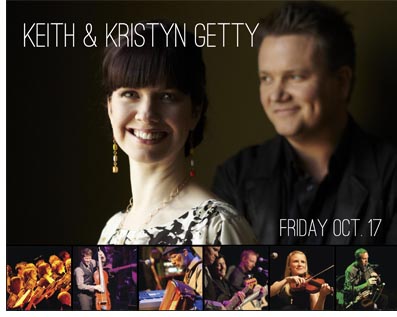
Keith and Kristyn Getty’s sold-out concert at Grace Presbyterian Church is less than two weeks away. On the verge of the concert they have released a new EP The Greengrass Sessions. This limited edition EP features:
My Worth Is Not in What I Own – the new hymn written by Keith and Kristyn and Graham Kendrick
Good Shepherd of My Soul – a warm and moving a capella rendition of one of Keith and Kristyn’s newer songs
Come Ye Sinners – a musical journey from Ireland to Appalachia envelops the traditional hymn
More on the new Newsboys album…. On the heels of one of the biggest years in their legendary career, Newsboys are at it again with a brand new hymns album, Hallelujah for the Cross. It will include many traditional hymns with new arrangements like: “Jesus Paid It All,” “What A Friend We Have In Jesus,” “It Is Well,” “All Hail The Power Of Jesus Name” and many more.
One of my favorite new songs is “Liberty” from Switchfoot’s new EP The Edge of the Earth: Unleased Songs from the Film ‘Fading West’: Here are the lyrics to the song:
A feeling comes to me in waves
The darkest seas I’ve ever known
Mine is an odyssey of grace
Mine is a story headed home
I tied myself to the mast
Give up the semblance of control
The sirens sing but I let them pass
Cause only You can free my soul
Set these broken bones to cast
Stitch my wounds with holy sutures
Every saint has got a past
But every sinner’s got a future
Show me the freedom from these chains
Show me a battlefield that saves
That world is still a word away
But You are my liberty
Free my soul, free my soul
And let liberty flow
Like a flood, let it go
And I’ll let the past go
I’ve come running back home
And I’ll make it, I know
All my love, all my hope
Only You could free my soul
Come on, free my soul
Only you could free my soul
I tie myself up to the mast
I tie myself up to the mast
And let it go
Quotable: Don’t go to bed tonight without preaching the gospel to your heart one more time. -Scotty Smith
Quotables:
God himself will milk the cows through him whose vocation that is. He who engages in the lowliness of his work performs God’s work, be the lad or king. – Martin Luther
A man must be big enough to admit his mistakes, smart enough to profit from them, and strong enough to correct them. – John C. Maxwell
Integrating Faith and Work: Connecting Sunday to Monday
Tim Challies recently began a new series on how he gets things done. He will share some of what he has learned along the way, by allowing the reader into his life and into his systems. This stuff is right up my alley. Read the first installment in the series.
Each morning on the way to work I pray for those that I will be meeting with and engaging with that day. That reminded me of this Lead Like Jesus e-devotional which states: “What is on your calendar today? What deadlines are you facing? What appointments are on your calendar? What if you used your calendar as a guide for your prayer time today?” Read the entire article “God’s Calendar” here: https://otm86890.infusionsoft.com/app/hostedEmail/14452928/f62613d5a95fff6a
This article asks “Is your daily work a high calling?” Yes, indeed, because it is one main way you respond to the calling of God. But your work is not your highest calling.” Read the article “Is My Work a Calling?” here: http://www.patheos.com/blogs/thehighcalling/2014/10/is-my-work-a-calling/
This week we continue our book club on Hugh Whelchel’s book How Then Should We Work?: Rediscovering the Biblical Doctrine of Work. Whelchel is the Executive Director the Institute for Faith, Work & Economics and has a passion and expertise in helping individuals integrate their faith and vocational calling. This week we cover the material in Chapter 4: Our Current Situation.
We continue with our overview of this new book on productivity from a Christian perspective. I’ve highlighted a number of passages and would like to share some of them from Chapter 16: The Problem with Full System Utilization.
To celebrate their 20th anniversary Francis and Lisa decided to serve at a village in Africa that one of their friends started. This body of believers had been building a village to feed children dying of starvation, liberate women trapped in prostitution, and give hope and opportunity to a community ravished by poverty. Moved by what God was doing there for the poor, Francis and Lisa wanted to bless the ministry to double or triple its impact. With another book already in motion, this time written together by Francis and Lisa, they saw an opportunity to use the book as a way to support the work in places like this village in Africa. They decided to self-publish with a team of volunteers to generate as much money possible to give away. 100% of net profits from each book sold goes straight to this vision. They would love to raise 5 million dollars to feed the hungry, free women from prostitution and spread the gospel to unreached places. All net proceeds are being directed to Crazy Love Ministries, a 501(c)3 registered in the state of California, and then are dispersed from there to several previously-selected partners for the book
Part of the reason why Francis and Lisa decided to publish independently was so they could bless others with the book who couldn’t afford it. To download a free PDF, please click here: Download PDF. Movie Reviews
I first saw Doug Michael’s cartoons in our local newspaper several years ago. Later, I found out that he worked with me at the same corporation. For years Doug allowed us to run his cartoons in Coram Deo, our church newsletter. I’m pleased to say that Doug is now allowing us to run his cartoons in our blog! Many thanks to Doug for sharing his talents with us. Here’s the first one – enjoy!
~ THIS AND THAT ~
MUSIC:
Keith and Kristyn Getty in Concert at Grace Presbyterian Church in Peoria on October 17 ~ just a reminder that Keith and Kristyn Getty will bring their “Hymns for the Christian Life” tour to Grace Presbyterian Church on October 17. Jim Hubert from WBNH reports that nearly 600 tickets have been sold already! Get your tickets soon. For more information and to purchase tickets go to http://www.wbnh.org/resources/store/
Switchfoot surprised their fans last week with a seven-song EP of unreleased songs from their excellent Fading West film. The EP is titled The Edge of the Earth and you can buy it on iTunes for just $6.99. Look for a review in next week’s blog.
Here’s an interesting new project – the songs of Paul McCartney sung by artists such as Billy Joel, Bob Dylan, Brian Wilson, Steve Miller, Heart, Jeff Lynn (Electric Light Orchestra), Yusuf (Cat Stevens), Willie Nelson and others. The two CD and DVD set will be released November 18.
You can watch below an exclusive 29 minute behind-the-scenes jamming session filmed at Paul McCartney’s “Early Days” video shoot. The official video was launched earlier this summer and the end of it sees Paul playing with a group of blues guitarists, including Johnny Depp. This exclusive footage captures an impromptu jamming session that broke out between Paul and the musicians on the day of the shoot. Watch it here: http://c4483579.r79.cf2.rackcdn.com/EarlyDaysJam_MFMclimatepledge_Web.html
Bob Seger has a new album coming out Ride Out, his first new album of new material in eight years, on October 14. On the album Seger covers one of my favorite John Hiatt songs “Detroit Made”. The songs seems like it was written for Seger to cover. Check out Seger performing the song in concert here: http://ultimateclassicrock.com/bob-seger-releases-detroit-made/
Music superstar Glen Campbell was diagnosed with Alzheimer’s disease in 2012. He went on one final farewell tour. ‘Glen Campbell I’ll Be Me’ tells the story of the shows, and a great cast of contributors includes Bruce Springsteen, Paul McCartney, Sheryl Crow, Taylor Swift and Edge. Check out the trailer for the film here: http://www.u2.com/news/title/ill-be-me
Gene Veith offers his contribution to Justin Taylor’s series on a work of fiction of that every Christian should consider reading. Check out his recommendation here.
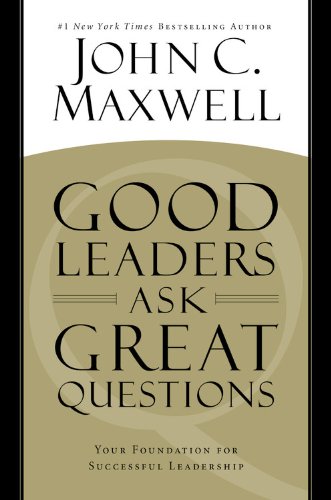
John Maxwell’s next book will be Good Leaders Ask Great Questions. It will be released on October 7.
And speaking of upcoming books of interest, Michael Horton’s new book is titledor-di-nar-y: 1. Sustainable Faith in a Radical World. It even features an orange cover, just as David Platt’s Radical book did. It will be published October 7.
How does the Gospel directly shape and direct your pursuit of holiness? How do we practically bring the Gospel to bear on the various facets of our lives, so that we might conduct our lives in a manner worthy of the Gospel? Mike Riccardi answers those questions by considering twelve different biblical virtues and showing how the Gospel draws a straight line to each of them. Read his article.
Have you heard about Covenant Eyes? It’s a Christian company whose service is built upon Job 31:1 “I have made a covenant with my eyes; why then should I look upon a young woman?” Read more about it here.
Check out this five-minute excerpt from a message delivered by John Piper at Bethlehem College & Seminary, on the meaning of worthiness in the Bible with a straightforward application for our lives.
Did you see Meghan Trainor, Jimmy Fallon and the Roots perform the number one song “All About the Bass” using classroom instruments on The Tonight Show? If not, check it out here: http://www.nbc.com/the-tonight-show/segments/11186
Steven Garber was the speaker at my Covenant Seminary graduation in May. Tammy and I are reading his newest book Visions of Vocation: Common Grace for the Common Good. Below are passages we highlighted from our reading of Chapter 3 – The Landscape of Our Lives:
To understand this cusp of a new century—marked as it is both by the sociological reality of the information age and the philosophical movement we call postmodernism—we have to pay attention to the novelists, filmmakers and musicians who are culturally upstream, as it is in their stories, movies and songs where we will feel the yearnings of what human life is and ought to be.
Whether staged or celluloid, in print or on computer disks, they are fingers to the wind. Why? Artists get there first.
Take U2, for example. It is hard to imagine students of history in some future era making sense of the dawn of this millennium without studying their music. Pop icons, yes. But prophets as well, as they have set out for themselves and their audience a vision of human life under the sun that has been as enormously entertaining as it has been politically and socially attentive.
While there are scores of songs that offer artful windows into the human heart, in their album Zooropa, the song “Numb” captures better than almost anything else what it feels like to be alive in the information age.
For those with eyes to see and ears to hear, the song is a finger on the pulse of the ABC/BBC/CBS/NBC/CNN/FOX/MSNBC on-all-the-time culture. And U2 gets at it brilliantly, profoundly. Artists do get there first. I feel numb.
A growing chorus of critics brings their voices to bear on the meaning of the information age, wondering what it means, and will mean, for all of us.
Describing the contemporary world as “an info-glut culture,” he has asked with probing seriousness, “But have we become any wiser?” The words echo across the landscape of our time.
One of the best known voices bringing a critical eye to bear upon the information age is Neil Postman, who for twenty-five years wrote as widely and perceptively as anyone on the challenge of learning to learn and live in a technological society.
With an uncanny eye and ear, he picked up on the tremendous challenge of holding onto one’s humanity in an information-saturated culture.
Carr instead draws on brain physiologists to argue that our very brains are being rewired so that we are seeing life differently, and we are reading the world differently. Scanning our way down the computer screen, hyperlinking as we do, we are decreasingly able to read more carefully, with the kind of discernment that critical reading requires. In a word, Carr calls our contemporary practice “the shallows.”
Of all that has been written on this phenomenon, Colin Gunton’s Bampton Lectures at Cambridge University, The One, the Three and the Many: God, Creation and the Culture of Modernity, seem the wisest. Brilliant and far-ranging, he argued that disengagement is the essence of modern life. Looking out at the world, we want to understand it, we want to respond to it—and yet we find it so very hard to do so in any morally meaningful way. Knowing what I know, what am I to do?
An info-glut culture? Yes, in more ways than we know, on more levels than we can understand. I feel numb. While the artists get there first, the world at large catches up, and we all wonder, What am I going to do?
As probing as that question is for all, some have decided, with a shrug of the mind and heart, whatever. Sometimes playful, often more cynical, the word itself is a window into the complexity of life; we feel overwhelmed in so many different ways all at once. How else to respond than with a heartfelt “whatever”? From casual conversations in families and among friends to core curricular commitments at major universities, “whatever” seems to many the best response to the way the world is—and isn’t.
Thoughtful, honest human beings wonder, Knowing what I know, what am I going to do? To do nothing seems less than human, seems less than right.
Whether we read the philosophers or not, the belief that we have no access to certainty, particularly to moral absolutes, to the world of “basic right and wrong in the universe,” is in the cultural air we breathe.
In a post-Enlightenment world, there is no voice, no perspective that carries more weight than any other, because no one has access to certainty about anything. There is no Story to make sense of stories, no Truth to make sense of truths, no Metanarrative to make sense of narratives. All claims to the contrary are “totalitarian” and are not to be tolerated. The worst face of postmodernism is that nothing has metaphysical or moral weight; it is the culture of whatever, a nihilism for Everyman.
To get what I want when I want it. To do what I want to do when I want to do it. Baldly stated, that is the way I have described morally malformed people to my children over the years, like a driver along the interstate who bullies everyone else, a politician who with Machiavellian cynicism skillfully uses the system to advance his own ambitions. Very, very bright people do not always make very, very good people. You can get all A’s and still flunk life.
Human lives and history are at stake here. No wise person, therefore, will step into this analysis with a cheap critique. But Solzhenitsyn’s analysis of the notion that “it would have seemed quite impossible, in America, that an individual be granted boundless freedom with no purpose, simply for the satisfaction of his whims” was profoundly prescient. He saw where the line in the sand was, and would continue to be, in the culture of whatever.
Few films have captured this dilemma with as much cinematic brilliance as Run Lola Run.
For the foreseeable future, we will never become a completely postmodern culture. At best, we are stretched taut between times. Airplane schedules, with all the technological complexities of air traffic controllers, with the mathematical precision required in allocation of air space, with the interrelatedness of computers across continents and oceans, require modern consciousness, the ongoing commitment to certain things—“facts”—being true for everyone all the time. But the on-the-street ethos, the air we breathe, is plainly that of postmodernism, and its worst face is the culture of whatever.
Seeing what I see, hearing what I hear, what am I going to do?
From mime artists in Paris, to attorneys walking the killing fields of Rwanda, to young, eager human rights activists in Washington, to graduate students at Yale, how does one learn to see with the eyes of the heart, to see oneself as responsible for the way the world is and isn’t? Not a cheap question, and there are no cheap answers.
Next week we’ll look at chapter 4. Won’t you join us?
Integrating Faith and Work
What does a holistic life of worship look like when we are at work or at school, when we are engaged in the daily tasks that make up the bulk of our lives? The following excerpt is from John Piper’s sermon: “What Is the Will of God and How Do We Know It?” which recently ran on the “Ask Pastor John” podcast. Listen to it here: http://www.desiringgod.org/interviews/worship-in-the-workplace
Rich Sheridan is a truly human leader, he just happens to have another name for it. He calls it “instilling joy” in his team members. His first book Joy Inc. – which I’ve just started – is a great story and how-to book about Rich’s journey to build a better information technology workplace. Read about Rich in Bob Chapman’s article “Putting Joy to Work”.
A few years ago, Michael Lindsay conducted a comprehensive study of national leaders—the largest of its kind—to identify commonalities among many of America’s most publicly influential figures. In this video, the president of Gordon College in Massachusetts sits down with Mark Mellinger to explore what he found. Watch the full 11-minute video to hear Lindsay discuss networking, burnout, the biggest problem in the leadership book genre, and more. When you’re finished, watch Lindsay sit down with two other institutional presidents, Albert Mohler and Philip Ryken, to discuss evidences of a maturing evangelical mind.
I recently listened to a sermon titled “Godliness and Work” from Beau Hughes, one of the pastors at the Village Church (where Matt Chandler is the lead pastor). His message was from a series on 1 Timothy about what we can learn from the church of Ephesus so that we can live in Godliness. In the passage covered Paul is giving instructions to slaves. Hughes begins his message with comments on the shooting and following events that had taken place in Ferguson, Missouri. You can listen to the sermon here http://www.thevillagechurch.net/sermon/godliness-and-work/
Dr. Amy Sherman (author of Kingdom Calling: Vocational Stewardship for the Common Good – see our overview here), a senior fellow at the Sagamore Institute, recently addressed a crowd of 120 pastors and ministry leaders at Leadership Journal’s third “Redeeming Work” event. Speaking in historic Mile High Station, a renovated steel factory, Sherman gave three clear reasons “why vocation really matters.”
John Piper writes that God “made you to work. And he cares about what you do with the half of your waking life called “vocation.” He wants you to rejoice in it. And he wants to be glorified in it.” Read twelve questions to consider about our next job:http://www.desiringgod.org/blog/posts/how-to-decide-about-your-next-job
Here are some words of wisdom from pharmaceutical industry consultant Boyd Clarke about how to take criticism. This is part of an ongoing feature of short video clips from a YouTube channel run by The High Calling called “60 Seconds to Significance“. It features approximately one-minute talks about work and calling, including practical tips on faith in the workplace and advice on dealing with tough questions. Watch the video here.
Dr. Art Lindsey writes “Not only did Jesus make good tables, but his toil was not in vain. If Jesus’s work for twenty years was not in vain, then how does that change the way we evaluate our own lives or those of others?” Read his article “The Meaning of Work in Life and Death”.
Ravi Zacharias recently completed a four-part series on “Faith Under Fire- Christian Ethics in the Workplace” on his Just Thinking podcast. You can listen to them here:
We recently completed week three in the book club for The Gospel at Work: How Working for King Jesus Gives Purpose and Meaning to our Jobs by Sebastian Traeger and Greg Gilbert. Read the highlighted passages from CHAPTER 4 – THE KING’S PURPOSE IN OUR WORK and CHAPTER 5 HOW SHOULD I CHOOSE A JOB?
We continue with our overview of this new book on productivity from a Christian perspective. I’ve highlighted a number of passages and would like to share some of them from CHAPTER 13 Clarifying Your Roles.







 What’s Best Next Series – Part 7