2014 has been a particularly strong year for music, with most of my favorite artists releasing new albums. Below are my top choices, in order, thus far:
1. Tie:
• Songs of Innocence – U2
• Anomaly – Lecrae
2. Neon Steeple – Crowder
3. Fading West and The Edge of the Earth – Switchfoot
4. Rivers in the Wasteland – NEEDTOBREATHE
5. 20 – Jars of Clay
Two other highly anticipated releases that may crack this list are Love Ran Red by Chris Tomlin and Rise by Trip Lee, both of which will be released October 28.
Run Wild, Live Free, Love Strong, the new album from For King & Country, who also guests on one song on Lecrae’s Anomaly, debuted at #2 on the iTunes top albums charts on September 16. Congratulations!
And the exciting new music just keeps coming. From Jars of Clay to Lecrae, U2 and Switchfoot, now comes news that Chris Tomlin has released a new single from his forthcoming album Love Ran Red. The album features the singles “Waterfall” and “Jesus Loves Me”, along with “Almighty” and “At the Cross (Love Ran Red)” which were included on the Passion: Take it All album earlier this year. Below are the lyrics to this excellent new worship anthem “Jesus Loves Me”, which I’m sure will be soon be sung in churches around the world:
I was lost
I was in chains
The world had a hold of me
My heart was a stone
I was covered in shame
When He came for me
I couldn’t run, couldn’t run from His presence
I couldn’t run, couldn’t run from His arms
Jesus, He loves me, He loves me, He is for me
Jesus, how can it be, He loves me, He is for me
And it was a fire
Deep in my soul
I’ll never be the same
I stepped out of the dark
And into the light
When He called my name
I couldn’t run, couldn’t run from His presence
I couldn’t run, couldn’t run from His arms
He holds the stars and He holds my heart
With healing hands that bear the scars
The rugged cross where He died for me
My only hope, my everything
My good friend Jeff told me that Steve Taylor is getting ready to release his first new album in 20 years. It will be called Goliath and will be released November 18. His band – The Perfect Foil – includes Peter Furler. Can’t wait!
Stevie Wonder, who rarely tours, will be in concert at the United Center in Chicago for the Songs in the Key of Life Performance tour on November 14. This will be a performance of his classic album of the same name. I saw him in concert at the State Farm Center (then called the Assembly Hall) back in 1974 and have long enjoyed his music.
Here’s Lecrae on how he wrote the song “Nuthin’” on The Tonight Show with Jimmy Fallon: http://www.nbc.com/the-tonight-show/segments/12026. Lecrae joined Jimmy Fallon’s house band, The Roots, for musical interludes between segments. He rapped portions of songs from his new album, including “Nuthin,” “Fear,” “All I Need is You,” “Say I Won’t,” and “Welcome to America.”
And one more on Lecrae….before he held the No. 1 spot on Billboard 200 charts for his newly released album Anomaly or sat in with The Roots on the Tonight Show with Jimmy Fallon, he was simply Lecrae Moore, a teenager who grew up on the southside of Houston without a strong father figure. Watch him describe his faith journey below on the video “The Cross”: http://billygraham.org/story/how-lecrae-gained-everything/
Michael Card recently was a guest on Steve Brown, etc., talking about his new book on the Gospel of John, the final book in his Biblical Imagination Series John: The Gospel of Wisdom. You can listen to the program here: http://www.keylife.org/shows/the-gospel-of-wisdom-michael-card
Andy Stanley’s next book is Ask It: The Question That Will Revolutionize How You Make Decisions. It is a revised and updated version of his book The Best Question Ever and will be released October 21.
David Murray has written a new book – The Happy Christian: Ten Ways to be a Joyful Believer in a Gloomy World. Read about it here.
Kirk Cameron’s next film is Saving Christmas. The promotion for the film states: Every year at Christmas time it seems the baby in the manger takes more and more of a backseat to retail sales, Santa Claus, and political correctness. With “Merry Christmas” being replaced by “Seasons Greetings” and court ordered removal of public nativity scenes, the fruit of Mary’s womb is falling on hard times. But this year, Kirk Cameron is taking back Christmas with his engaging new movie Saving Christmas. Opening in select theaters November 14, the newest movie from the star of Fireproof and Unstoppable is filled with laughter, warmth, and God-honoring cheer! Saving Christmas will change the way your family sees and celebrates this magical time of year. Check out the official site for the film here: http://savingchristmas.com/
Andrew Barber has a problem with Christian films (and so does Tammy by the way, but perhaps for different reasons). Barber writes that there are currently two primary problems with Christian films: (1) they are either inherently dishonest and/or (2) they are primarily concerned with what C. S. Lewis called “egoistic castle-building.” Read his article “The Problem with Christian Films” here: http://thegospelcoalition.org/article/the-problem-with-christian-films
INTERESTING ARTICLES, VIDEOS AND EARNEST PRAYERS:
I found this article from World Magazine about two Christian colleges – College of the Ozarks and Louisiana College – to be very interesting. Read “A Tale of Two Schools”.
In honor of Redeemer Presbyterian Church’s 25th anniversary, a video sermon of Tim Keller’s February 17, 2013 sermon “Suffering and Glory” from Acts is being offered free for a limited time. Click here to find out more.
Steven Lawson writes that we often attempt to live the Christian life in our own strength. But, we have God’s power within us, enabling us to do what is otherwise impossible. Read his article “The Power to Persevere”.
Eric Davis shares 7 truths to arm God’s people for their spiritual holy war against sin from Puritan Pastor John Owen. Click here to read them.
I’ve mentioned this before, but wanted to again recommend the daily podcast The Briefing with Albert Mohler. I listen to the 20 minute program of daily worldview analysis about the leading news headlines and cultural conversations each morning. Here’s a link to the site so that you can listen too: http://www.albertmohler.com/category/the-briefing/
Albert Mohler writes that “The sexuality crisis has demonstrated the failure of theological method on the part of many pastors. The “concordance reflex” simply cannot accomplish the type of rigorous theological thinking needed in pulpits today. Pastors and churches must learn the indispensability of biblical theology and must practice reading Scripture according to its own internal logic—the logic of a story that moves from creation to new creation. The hermeneutical task before us is great, but it is also indispensable for faithful evangelical engagement with the culture.” Read his article “Biblical Morality and the Sexuality Crisis” here: http://www.albertmohler.com/2014/09/16/biblical-theology-and-the-sexuality-crisis/
We don’t like to wait – I know I sure don’t. Paul Maxwell of Desiring God writes that helpful to remember that “God’s most precious gifts are often established in gradation for three reasons”. Read what those reasons are in his article titled “Do You Hate to Wait?” here: http://www.desiringgod.org/blog/posts/do-you-hate-to-wait
Jon Bloom of Desiring God writes “Irritability. I give into it too often. It’s time to take this sin more seriously and lay it aside (Hebrews 12:1). Every time I’m irritable I burden myself with the detrimental weights of prideful selfishness and relational conflict. And as my irritation overflows on others, it burdens them too because my harsh words stir up anger in them (Proverbs 15:1).” I know I struggle with irritability more than I would like to admit. Read his article “Lay Aside the Weight of Irritability” here: http://www.desiringgod.org/blog/posts/lay-aside-the-weight-of-irritability
Former Petra and Head East lead singer John Schlitt has been working with Jay Sekulow of ACLJ, John Elefante and Mark Townsend. They have just recorded their first original tune, Where I Stand, which is a moving tribute to the persecuted Christians in Iraq. The song goes hand-in-hand with an original book written by Sekulow called “Rise of ISIS: A Threat We Can’t Ignore.” The song is available when you purchase the book.
Scotty Smith tweeted the below picture of women being sold like slaves in Mosul, Iraq by ISIS, saying “This is what true slavery looks like, people”.
Quotables
The only thing that we have earned at the hands of perfect justice is perfect punishment. -RC Sproul
If you have wasted your whole life, and have five minutes left, you can live them to the glory of Christ. -John Piper
Quotable: Your work is going to fill a large part of your life, and the only way to be truly satisfied is to do what you believe is great work. And the only way to do great work is to love what you do. If you haven’t found it yet, keep looking. Don’t settle. As with all matters of the heart, you’ll know when you find it. -Steve Jobs
INTEGRATING FAITH AND WORK: Connecting Sunday to Monday
Dr. Alan Zimmerman writes that business success and gratefulness go hand in hand. Read his “Tuesday Tip” titled “The Wonder of Gratitude” here” http://drzimmerman.com/tuesdaytip/gratitude.php
On this month’s Leadership podcast titled “Keystone Habits”, Andy Stanleytalks about habits that can change your organization. You can find the podcast on iTunes or here: http://andystanley.com/free-resources/
Here is a one-minute video (“60 Seconds to Significance” from The High Calling) from pharmaceutical and vaccine industry consultant Boyd Clarke on how to take criticism.
Matt Perman writes “What are the components of an effective management philosophy that is based upon the fact that humans are in the image of God and that the glory of God is the goal of all things? I am going to outline eleven”. Read his article titled “Management in Light of the Supremacy of God: How Should Christians Think about Management” here: http://whatsbestnext.com/2011/01/management-in-light-of-the-supremacy-of-god/
Matt Perman shares the slide deck he uses to help introduce people to the theology of productivity that he gives in What’s Best Nextthe book. It can serve as a good refresher for those who have read the book, and also something that you can easily share with those who haven’t read the book.
I receive the Lead Like Jesus e-devotional three times each week. This one from last Friday got my attention as the prayer stated “Lord, I hand over my need to be in control, my desire to look good in other people’s eyes”, a few things that are probably counterfeit idols in my life. Read the entire devotional here: http://leadlikejesus.com/blog/blog-post/seeking-answers#
In this article titled “Heroism in a Cubicle”, Dr. David Leonard states “To put it differently, you must resolve to be intellectually virtuous; you must resolve to be heroic, even in your cubicle. dc46cd4#sthash.y5L6UZKH.dpuf
In his article “What is the Vocation of a Student”, Andrew Spencer offers five lessons he wishes he had learned as a younger student. Find out what those lessons are.
Christianaudio is offering John Maxwell’s Leadership Series audiobooks at a discount of up to 75% off through September 30. Check out the details.
Faith and Work Book Clubs – Won’t you read along with us?
This week we continue our book club on Hugh Whelchel’s book How Then Should We Work? Rediscovering the Biblical Doctrine of Work. Whelchel is the Executive Director of the Institute for Faith, Work & Economics and has a passion and expertise in helping individuals integrate their faith and vocational calling. Read the passages I highlighted in Chapter 2: The Gospel, The Kingdom and Our Calling: What Does the Bible Say About Work?
We continue with our overview of this new book on productivity from a Christian perspective. I’ve highlighted a number of passages and would like to share some of them from chapter 14.
To celebrate their 20th anniversary Francis and Lisa decided to serve at a village in Africa that one of their friends started. This body of believers had been building a village to feed children dying of starvation, liberate women trapped in prostitution, and give hope and opportunity to a community ravished by poverty. Moved by what God was doing there for the poor, Francis and Lisa wanted to bless the ministry to double or triple its impact. With another book already in motion, this time written together by Francis and Lisa, they saw an opportunity to use the book as a way to support the work in places like this village in Africa. They decided to self-publish with a team of volunteers to generate as much money possible to give away. 100% of net profits from each book sold goes straight to this vision. They would love to raise 5 million dollars to feed the hungry, free women from prostitution and spread the gospel to unreached places. All net proceeds are being directed to Crazy Love Ministries, a 501(c)3 registered in the state of California, and then are dispersed from there to several previously-selected partners for the book
Part of the reason why Francis and Lisa decided to publish independently was so they could bless others with the book who couldn’t afford it. To download a free PDF, please click here: Download PDF. Movie Reviews
I first saw Doug Michael’s cartoons in our local newspaper several years ago. Later, I found out that he worked with me at the same corporation. For years Doug allowed us to run his cartoons in Coram Deo, our church newsletter. I’m pleased to say that Doug is now allowing us to run his cartoons in our blog! Many thanks to Doug for sharing his talents with us. Here’s the first one – enjoy!
~ THIS AND THAT ~
MUSIC:
Keith and Kristyn Getty in Concert at Grace Presbyterian Church in Peoria on October 17 ~ just a reminder that Keith and Kristyn Getty will bring their “Hymns for the Christian Life” tour to Grace Presbyterian Church on October 17. Jim Hubert from WBNH reports that nearly 600 tickets have been sold already! Get your tickets soon. For more information and to purchase tickets go to http://www.wbnh.org/resources/store/
Switchfoot surprised their fans last week with a seven-song EP of unreleased songs from their excellent Fading West film. The EP is titled The Edge of the Earth and you can buy it on iTunes for just $6.99. Look for a review in next week’s blog.
Here’s an interesting new project – the songs of Paul McCartney sung by artists such as Billy Joel, Bob Dylan, Brian Wilson, Steve Miller, Heart, Jeff Lynn (Electric Light Orchestra), Yusuf (Cat Stevens), Willie Nelson and others. The two CD and DVD set will be released November 18.
You can watch below an exclusive 29 minute behind-the-scenes jamming session filmed at Paul McCartney’s “Early Days” video shoot. The official video was launched earlier this summer and the end of it sees Paul playing with a group of blues guitarists, including Johnny Depp. This exclusive footage captures an impromptu jamming session that broke out between Paul and the musicians on the day of the shoot. Watch it here: http://c4483579.r79.cf2.rackcdn.com/EarlyDaysJam_MFMclimatepledge_Web.html
Bob Seger has a new album coming out Ride Out, his first new album of new material in eight years, on October 14. On the album Seger covers one of my favorite John Hiatt songs “Detroit Made”. The songs seems like it was written for Seger to cover. Check out Seger performing the song in concert here: http://ultimateclassicrock.com/bob-seger-releases-detroit-made/
Music superstar Glen Campbell was diagnosed with Alzheimer’s disease in 2012. He went on one final farewell tour. ‘Glen Campbell I’ll Be Me’ tells the story of the shows, and a great cast of contributors includes Bruce Springsteen, Paul McCartney, Sheryl Crow, Taylor Swift and Edge. Check out the trailer for the film here: http://www.u2.com/news/title/ill-be-me
Gene Veith offers his contribution to Justin Taylor’s series on a work of fiction of that every Christian should consider reading. Check out his recommendation here.
John Maxwell’s next book will be Good Leaders Ask Great Questions. It will be released on October 7.
And speaking of upcoming books of interest, Michael Horton’s new book is titledor-di-nar-y: 1. Sustainable Faith in a Radical World. It even features an orange cover, just as David Platt’s Radical book did. It will be published October 7.
How does the Gospel directly shape and direct your pursuit of holiness? How do we practically bring the Gospel to bear on the various facets of our lives, so that we might conduct our lives in a manner worthy of the Gospel? Mike Riccardi answers those questions by considering twelve different biblical virtues and showing how the Gospel draws a straight line to each of them. Read his article.
Have you heard about Covenant Eyes? It’s a Christian company whose service is built upon Job 31:1 “I have made a covenant with my eyes; why then should I look upon a young woman?” Read more about it here.
Check out this five-minute excerpt from a message delivered by John Piper at Bethlehem College & Seminary, on the meaning of worthiness in the Bible with a straightforward application for our lives.
Did you see Meghan Trainor, Jimmy Fallon and the Roots perform the number one song “All About the Bass” using classroom instruments on The Tonight Show? If not, check it out here: http://www.nbc.com/the-tonight-show/segments/11186
Steven Garber was the speaker at my Covenant Seminary graduation in May. Tammy and I are reading his newest book Visions of Vocation: Common Grace for the Common Good. Below are passages we highlighted from our reading of Chapter 3 – The Landscape of Our Lives:
To understand this cusp of a new century—marked as it is both by the sociological reality of the information age and the philosophical movement we call postmodernism—we have to pay attention to the novelists, filmmakers and musicians who are culturally upstream, as it is in their stories, movies and songs where we will feel the yearnings of what human life is and ought to be.
Whether staged or celluloid, in print or on computer disks, they are fingers to the wind. Why? Artists get there first.
Take U2, for example. It is hard to imagine students of history in some future era making sense of the dawn of this millennium without studying their music. Pop icons, yes. But prophets as well, as they have set out for themselves and their audience a vision of human life under the sun that has been as enormously entertaining as it has been politically and socially attentive.
While there are scores of songs that offer artful windows into the human heart, in their album Zooropa, the song “Numb” captures better than almost anything else what it feels like to be alive in the information age.
For those with eyes to see and ears to hear, the song is a finger on the pulse of the ABC/BBC/CBS/NBC/CNN/FOX/MSNBC on-all-the-time culture. And U2 gets at it brilliantly, profoundly. Artists do get there first. I feel numb.
A growing chorus of critics brings their voices to bear on the meaning of the information age, wondering what it means, and will mean, for all of us.
Describing the contemporary world as “an info-glut culture,” he has asked with probing seriousness, “But have we become any wiser?” The words echo across the landscape of our time.
One of the best known voices bringing a critical eye to bear upon the information age is Neil Postman, who for twenty-five years wrote as widely and perceptively as anyone on the challenge of learning to learn and live in a technological society.
With an uncanny eye and ear, he picked up on the tremendous challenge of holding onto one’s humanity in an information-saturated culture.
Carr instead draws on brain physiologists to argue that our very brains are being rewired so that we are seeing life differently, and we are reading the world differently. Scanning our way down the computer screen, hyperlinking as we do, we are decreasingly able to read more carefully, with the kind of discernment that critical reading requires. In a word, Carr calls our contemporary practice “the shallows.”
Of all that has been written on this phenomenon, Colin Gunton’s Bampton Lectures at Cambridge University, The One, the Three and the Many: God, Creation and the Culture of Modernity, seem the wisest. Brilliant and far-ranging, he argued that disengagement is the essence of modern life. Looking out at the world, we want to understand it, we want to respond to it—and yet we find it so very hard to do so in any morally meaningful way. Knowing what I know, what am I to do?
An info-glut culture? Yes, in more ways than we know, on more levels than we can understand. I feel numb. While the artists get there first, the world at large catches up, and we all wonder, What am I going to do?
As probing as that question is for all, some have decided, with a shrug of the mind and heart, whatever. Sometimes playful, often more cynical, the word itself is a window into the complexity of life; we feel overwhelmed in so many different ways all at once. How else to respond than with a heartfelt “whatever”? From casual conversations in families and among friends to core curricular commitments at major universities, “whatever” seems to many the best response to the way the world is—and isn’t.
Thoughtful, honest human beings wonder, Knowing what I know, what am I going to do? To do nothing seems less than human, seems less than right.
Whether we read the philosophers or not, the belief that we have no access to certainty, particularly to moral absolutes, to the world of “basic right and wrong in the universe,” is in the cultural air we breathe.
In a post-Enlightenment world, there is no voice, no perspective that carries more weight than any other, because no one has access to certainty about anything. There is no Story to make sense of stories, no Truth to make sense of truths, no Metanarrative to make sense of narratives. All claims to the contrary are “totalitarian” and are not to be tolerated. The worst face of postmodernism is that nothing has metaphysical or moral weight; it is the culture of whatever, a nihilism for Everyman.
To get what I want when I want it. To do what I want to do when I want to do it. Baldly stated, that is the way I have described morally malformed people to my children over the years, like a driver along the interstate who bullies everyone else, a politician who with Machiavellian cynicism skillfully uses the system to advance his own ambitions. Very, very bright people do not always make very, very good people. You can get all A’s and still flunk life.
Human lives and history are at stake here. No wise person, therefore, will step into this analysis with a cheap critique. But Solzhenitsyn’s analysis of the notion that “it would have seemed quite impossible, in America, that an individual be granted boundless freedom with no purpose, simply for the satisfaction of his whims” was profoundly prescient. He saw where the line in the sand was, and would continue to be, in the culture of whatever.
Few films have captured this dilemma with as much cinematic brilliance as Run Lola Run.
For the foreseeable future, we will never become a completely postmodern culture. At best, we are stretched taut between times. Airplane schedules, with all the technological complexities of air traffic controllers, with the mathematical precision required in allocation of air space, with the interrelatedness of computers across continents and oceans, require modern consciousness, the ongoing commitment to certain things—“facts”—being true for everyone all the time. But the on-the-street ethos, the air we breathe, is plainly that of postmodernism, and its worst face is the culture of whatever.
Seeing what I see, hearing what I hear, what am I going to do?
From mime artists in Paris, to attorneys walking the killing fields of Rwanda, to young, eager human rights activists in Washington, to graduate students at Yale, how does one learn to see with the eyes of the heart, to see oneself as responsible for the way the world is and isn’t? Not a cheap question, and there are no cheap answers.
Next week we’ll look at chapter 4. Won’t you join us?
Integrating Faith and Work
What does a holistic life of worship look like when we are at work or at school, when we are engaged in the daily tasks that make up the bulk of our lives? The following excerpt is from John Piper’s sermon: “What Is the Will of God and How Do We Know It?” which recently ran on the “Ask Pastor John” podcast. Listen to it here: http://www.desiringgod.org/interviews/worship-in-the-workplace
Rich Sheridan is a truly human leader, he just happens to have another name for it. He calls it “instilling joy” in his team members. His first book Joy Inc. – which I’ve just started – is a great story and how-to book about Rich’s journey to build a better information technology workplace. Read about Rich in Bob Chapman’s article “Putting Joy to Work”.
A few years ago, Michael Lindsay conducted a comprehensive study of national leaders—the largest of its kind—to identify commonalities among many of America’s most publicly influential figures. In this video, the president of Gordon College in Massachusetts sits down with Mark Mellinger to explore what he found. Watch the full 11-minute video to hear Lindsay discuss networking, burnout, the biggest problem in the leadership book genre, and more. When you’re finished, watch Lindsay sit down with two other institutional presidents, Albert Mohler and Philip Ryken, to discuss evidences of a maturing evangelical mind.
I recently listened to a sermon titled “Godliness and Work” from Beau Hughes, one of the pastors at the Village Church (where Matt Chandler is the lead pastor). His message was from a series on 1 Timothy about what we can learn from the church of Ephesus so that we can live in Godliness. In the passage covered Paul is giving instructions to slaves. Hughes begins his message with comments on the shooting and following events that had taken place in Ferguson, Missouri. You can listen to the sermon here http://www.thevillagechurch.net/sermon/godliness-and-work/
Dr. Amy Sherman (author of Kingdom Calling: Vocational Stewardship for the Common Good – see our overview here), a senior fellow at the Sagamore Institute, recently addressed a crowd of 120 pastors and ministry leaders at Leadership Journal’s third “Redeeming Work” event. Speaking in historic Mile High Station, a renovated steel factory, Sherman gave three clear reasons “why vocation really matters.”
John Piper writes that God “made you to work. And he cares about what you do with the half of your waking life called “vocation.” He wants you to rejoice in it. And he wants to be glorified in it.” Read twelve questions to consider about our next job:http://www.desiringgod.org/blog/posts/how-to-decide-about-your-next-job
Here are some words of wisdom from pharmaceutical industry consultant Boyd Clarke about how to take criticism. This is part of an ongoing feature of short video clips from a YouTube channel run by The High Calling called “60 Seconds to Significance“. It features approximately one-minute talks about work and calling, including practical tips on faith in the workplace and advice on dealing with tough questions. Watch the video here.
Dr. Art Lindsey writes “Not only did Jesus make good tables, but his toil was not in vain. If Jesus’s work for twenty years was not in vain, then how does that change the way we evaluate our own lives or those of others?” Read his article “The Meaning of Work in Life and Death”.
Ravi Zacharias recently completed a four-part series on “Faith Under Fire- Christian Ethics in the Workplace” on his Just Thinking podcast. You can listen to them here:
We recently completed week three in the book club for The Gospel at Work: How Working for King Jesus Gives Purpose and Meaning to our Jobs by Sebastian Traeger and Greg Gilbert. Read the highlighted passages from CHAPTER 4 – THE KING’S PURPOSE IN OUR WORK and CHAPTER 5 HOW SHOULD I CHOOSE A JOB?
We continue with our overview of this new book on productivity from a Christian perspective. I’ve highlighted a number of passages and would like to share some of them from CHAPTER 13 Clarifying Your Roles.
Last weekend we celebrated our birthdays with a long weekend at beautiful Lake Geneva, Wisconsin. I love Wisconsin, having often vacationed in Hayward growing up and having enjoyed a few vacations in Door County more recently. We had visited Lake Geneva a few times over the past decade, with this time being the first time we had spent two nights (though one more night would have been perfect!). We stayed at the Mill Creek Hotel for the second time. It is a 33 room boutique suite hotel, which is located perfectly in the heart of the shopping (about a hundred shops) and restaurant district near the Riviera Docks.
The center of Lake Geneva is Geneva Lake, a deep (140 feet at the deepest) clear water lake which is surrounded by beautiful homes (many dating back to the early 20th century when many business leaders from Chicago built homes at the lake). A walking path is available which allows you to make the full 21 mile walk around the lake, or as much of it as you would like.
There are about a thousand piers on the lake, and on a busy summer day there will be that many boats on the lake. We experienced two days of great weather, and since it was after Labor Day, the lake was far less crowded. We would recommend you take one of the many different boat cruises that depart several times a day from the Riviera Docks. The Riviera once featured big bands and singers such as Louis Armstrong and a young Frank Sinatra, and now is a popular destination for weddings. We enjoyed meals at Popeye’s and Scuttlebutts just across Wrigley Avenue from the lake. We also had some great pizza at the Next Door Pub, watching the Cardinals beat the Milwaukee Brewers just an hour away from Lake Geneva.
If you’ve never checked out Lake Geneva, we highly recommend the three hour and fifteen minute drive. You can take in a movie at the Showboat Theatre, play golf, take long walks or eat at any number of excellent restaurants as you enjoy the beauty. You won’t regret it!
My Amazing Wife
Last weekend we celebrated Tammy’s birthday. In fact we celebrated both of our birthdays with a long weekend trip to one of our favorite places – Lake Geneva, Wisconsin. As I thought about Tammy’s birthday, I was again reminded how blessed I am to be her husband. She is my Proverbs 31 woman.
Initially, the Lord used Tammy to help draw me to Him. I was raised Roman Catholic and went to church every Sunday, but it made no difference in my life. When we met she was focused on her career in Accounting, with goals of achieving her CPA (Certified Public Accountant) designation and becoming a partner in an Accounting firm. But the Lord had other plans for her. Early in our marriage she became seriously ill and her life changed into one of service. Over the past 30 years, she has served as a Hospice volunteer, at a Catholic worker house, a soup kitchen (12 years), as the treasurer at our church (18 plus years), and will soon begin her next journey of service as a CASA (Court Appointed Special Advocate) volunteer. I appreciate so many things about Tammy, but her spirit of service is amazing. Thank you Lord for Tammy!
Coram Deo
What makes our blog different from all of the others out there? I see four components to what we hope to do each week. We aim to:
Look at art (music, movies, and books) from a Christian worldview.
Contemplate culture (news, theology) and share important articles with you.
Consider how to integrate faith and work.
Share articles, videos and cartoons that will make you smile.
The latest to offer their recommendation for a novel that every Christian should consider reading is Andrew Peterson. His recommendation Jayber Crow by Wendell Berry. Read Justin Taylor’s article.
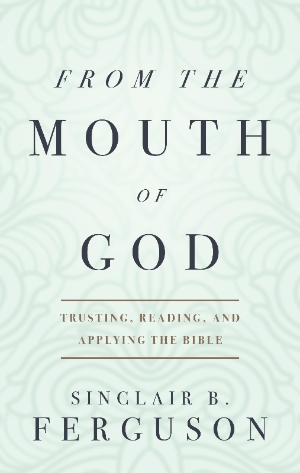
David Murray reviews the new book From the Mouth of God by Sinclair Ferguson. Read his review.
The latest book from the Duck Commander family is from Sadie Robertson. Her book Live Original: How the Duck Commander Teen Keeps It Real and Stays True to Her Values will be released on October 28.
And not to be outdone, Robertson brother Alan will release his first book A New Season: A Robertson Family Love Story of Brokenness and Redemption on January 6.
Kevin Trax writes that “Evangelicals were taken aback this summer by popular Christian contemporary musician Michael Gungor’s denial of the historicity of several Old Testament narratives. This came just weeks after Jars of Clay’s lead singer, Dan Haseltine, took to Twitter to debate the merits of same-sex marriage. Both situations provoked celebration from the left and consternation from the right. Why such a fuss over Christian musicians’ theology and ethics?” Read his article “Gungor, Questions, and the Doubters Among Us”.
Lecrae’s highly anticipated Anomaly, which was released on September 8, has been streaming free in its entirety on iTunes radio.
ARTICLES OF INTEREST –
The 2015 Gospel Coalition National Conference will be held in Orlando April 13-15. The theme is “Coming Home: New Heaven & New Earth” Speakers include Tim Keller, John Piper, D.A. Carson, Albert Mohler, Russell Moore, Randy Alcorn, Trip Lee and dozens more. To find out more and register go to: http://2015.thegospelcoalition.org/
John Maxwell talks about the “word of the day” each day in a short video. On this day, the word was “grace”. Check out what Maxwell says about grace here: http://johnmaxwellteam.com/grace-2/
Kevin DeYoung writes that “You may be familiar with the provocative idea from Martyn Lloyd-Jones (1899-1981) that the true test of gospel preaching is whether people mistake your gospel for antinomianism. Here, for example, is the Doctor preaching from Romans 6 on the charge “shall we continue in sin, that grace may abound?”: http://thegospelcoalition.org/blogs/kevindeyoung/2014/08/29/lloyd-jones-on-scandalous-grace-that-isnt-cheap/
Tim Challies writes “Now is the time to renew our commitment to a life of self-control, a life that is disciplined toward godliness. It is time to renew our commitment to their sheer goodness, and their plain value. There is no better time than right now.” Read his article“The Lost Virtue of Self-Control”.
Marshall Segall of Desiring God writes: “He who began a good work in you — saving you and beginning to make you more like Jesus — he will complete that work.” Read his article “Love That Will Complete You” here: http://www.desiringgod.org/blog/posts/love-that-will-complete-you
LIGONIER MINISTRIES –
Ligonier Ministries has released a new 12-part teaching series, Only Two Religionsfrom Dr. Peter Jones which examines the worldview and fundamental religious convictions that drive modern culture. He demonstrates that in the final analysis, there can be only two religions—worship of the Creator or worship of creation. To find out more go to: http://www.ligonier.org/store/only-two-religions-dvd/
Rosaria Butterfield will be speaking at the Ligonier National Conference Pre-Conference. When she spoke at Wheaton College there were protesters. She is a former lesbian tenured professor in feminist studies at Syracuse University. Read about the protest and listen to her chapel address at Wheaton here: http://www.dennyburk.com/wheaton-students-protest-rosaria-butterfield/
Ligonier Ministries has released a new course from Sinclair Ferguson in their Ligonier Connect curriculum on Jesus’ Farewell Discourse. In the course, Dr. Ferguson paints a vivid picture of the disciples’ final moments with their Savior. Carefully walking through John 13–17, Dr. Ferguson reminds us of the centrality of Christ in all of life. Read more here: https://connect.ligonier.org/school/catalog/course/jesus-farewell-discourse/
Steven Garber was the speaker at my Covenant Seminary graduation in May. Tammy and I are reading his newest book Visions of Vocation: Common Grace for the Common Good. Below are passages we highlighted from our reading for the second week of our book club:
The Last Butterfly is about moral imagination, about learning to see with the heart in the context of one’s calling, right in the middle of the push and shove of life, full as it is of complex responsibilities.
Our propensity to deceive ourselves about our place and purpose makes it so very difficult to see the truth of our lives, to understand the meaning of our moment in history and our responsibility to it.
The importance of The Last Butterfly is that it asks the viewer this probing question: In the context of one’s calling, how does one learn to see with the eyes of the heart, to see oneself as responsible for the way the world is and isn’t?
In a captivating though sobering chapter, “The Duties of Law-Abiding Citizens,” she described Eichmann as reading his world through this lens: This was the way things were, this was the new law of the land, based on the Führer’s order; whatever he did he did, as far as he could see, as a law-abiding citizen. He did his duty, as he told the police and the court over and over again; he not only obeyed orders, he also obeyed the law.
The distinction mattered to Eichmann. In the pharisaism of his heart, he understood his employment as a public vocation with professional responsibilities, so that it was important to not only do one’s duty but to obey the law—even if the law was one and the same with the fatally flawed Führer himself.
Arendt painstakingly set forth the historical details of the Nazi vision in general, and Eichmann’s role in particular, always returning to the question, “Why didn’t he see these people as neighbors? What perversion of law and order made it possible to go to work day by day, year after year, making choices with horrific consequences, and to see it all as “my duty”?
Also perplexed by Eichmann and the court, she tried to find language sufficient to communicate the moral meaning of his actions, and offered the word thoughtlessness—he did not think things through, he was not thoughtful about what he did and what it meant. In the narrowness of his vision of neighbor, of citizen, of employee, he failed to follow through on the moral implications of his beliefs and behavior.
Eichmann’s failure to see truthfully enabled him, by just doing his job, to oversee Theresienstadt, the “city of the Jews” in The Last Butterfly. The film is what we call historical fiction, but Eichmann’s role was far from fictional. Blind to the meaning of who he was and what it meant, he made sure that the trains left on time for Auschwitz, going to bed at night certain that “with the killing of Jews I had nothing to do.”
But the harsh truth is that the twentieth century produced other holocausts, some more terrifying than that of Nazis, and to own that history is part of our human responsibility even in the midst of our ordinary lives in ordinary places.
Over time Gary decided to leave the Department of Justice to find a way to address injustices small and large wherever they might be found. If in the Philippines it was child prostitution, in India it was child slavery. And so three years after the Rwandan genocide, the International Justice Mission was formed. Now, fifteen years later, IJM has developed networks of attorneys, investigators and trauma social workers in nations on every continent.
Two stories, one century: Eichmann and Haugen. Where one did not see a neighbor in need, the other understood that moral, political and social injustice is in fact always one more window into a neighbor’s need. The question that searches the deepest places is this: Why did Gary feel responsible? He had eyes to see that he was in fact responsible to do something, because someone had to say no. And he found a way in the context of his calling to do just that.
Over the years I have read and reread Percy’s work, dwelling in his vision of learning and life. He is, after all, the one who wrote that “it is possible to get all A’s and still flunk life.”
An observation about the human condition from his novel The Second Coming, the second of two novels about Will Barrett, his words are a warning about the temptation that lurks around the corner of everyone’s heart—to believe that competence can be separated from character, that excellence can be defined in merely academic terms without a corresponding concern for the kind of people we are. Do we have eyes to see what is really important? What really matters?
Along the way, principally in conversations with good friends, he was drawn to mere Christianity, to the gospel of the kingdom which was strange good news for someone like him who longed for something to believe about life and the world that could make sense of his life in the world.
What the literati saw in Percy’s work was his unflinching willingness to look at sorrow and anguish and not blink. Eyes that see, yes—but what do we see? He was not a romantic—that was not a possibility. Rather he was a realist to the core. What the reviewers missed was his deeply rooted commitment to seeing human beings as “pilgrims in the ruins,” that we are glories and shames at the same time.
“But I always want some hint of hope in my writing.” What did he mean? And why did it matter?
Honest readers of Percy’s work acknowledge that he was painstakingly honest about the sorrows that are ours as human beings, and his hints of hope were never more than that.
There is one great question in his work: “Knowing what you know about yourself and the world, what are you going to do?”
Attentive as he was to life, and to his life, Percy was writing about the challenge of being alive in the modern world. So much to see, so much to hear, so much to know—what will we do?
That is the most difficult dilemma for thoughtful, serious human beings: What will you do with what you know?
If most of Europe was Eichmann-like, offering “the obedience of corpses” in thousands of terribly ordinary ways, there were exceptions. In every nation there are people who choose otherwise, who have eyes to see that something is wrong and that they can do something about it.
Taken together they are some of the best stories in the whole of history, reminding all of us what it means to be a neighbor, what it means to have eyes that see.
In thousands of important and different ways, each is a story formed by the asking and answering of the question, knowing what I know, what will I do?
Always and everywhere, this is our challenge as human beings. Can we know and love the world at the very same time? Knowing its glories and shames, can we still choose to love what we know? Is there any task more difficult than that?
Knowing what I know about the way the world is, what am I going to do? A mime in Europe had to answer, as did the Nazi bureaucrats, as did the Justice Department lawyer, as do all of us. Percy’s question echoes through the heart of every human being, and it is especially poignant for those coming out of the starting blocks of early adulthood with a life of knowing and doing on the horizon. The question requires an answer if we are going be human.
Next week we’ll look at chapter 3. Won’t you join us?
Faith and Work Book Clubs – Won’t you read along with us?
How then Should We Work? Rediscovering the Biblical Doctrine of Work by Hugh Whelchel
This week we begin a new book club on Hugh Whelchel’s book How Then Should We Work? Rediscovering the Biblical Doctrine of Work. Whelchel is the Executive Director of the Institute for Faith, Work & Economics and has a passion and expertise in helping individuals integrate their faith and vocational calling. This week we cover the material in the book through the first chapter. Click here to read the passages I highlighted in CHAPTER 1.
What’s Best Next Series – Part 6
We continue with our overview of this new book on productivity from a Christian perspective. I’ve highlighted a number of passages and would like to share some of them from CHAPTER 12: Finding Your Life Calling (Click here and scroll to the bottom of the page).
In her article “This was not My Plan”, Courtney Reissig writes that “I’m okay with that possibility because I see the expansive work of redemption that God is doing through all of his people and through all of their work.” Read her article here: http://thegospelcoalition.org/article/this-was-not-my-plan
Recently some members of the Patheos Faith and Work Channel staff attended the Washington Institute’s “Come and See” Vocation Conference. There were many thought-provoking talks and discussions, and the “MISSION:WORK” blog is starting to report in on them. Check out the first four here.
In this 11th installment in the “Love at Work” series, John Kyle, the author shares two concerns that we should be aware of at work – addressing the sin in our own hearts and that we are not to delight in the sin of others. Read this article entitled “The Subtle Sins of the Workplace”.
Dr. Gene Veith writes “Do you want to know how Christians can influence the culture? How to have a strong family? Do you want to know the meaning of your life? Do you want to know how authority works? Then attend to the Reformation doctrine of vocation.” Read his article “Authority in Vocation” here http://www.ligonier.org/blog/authority-in-vocation/
It’s often said that people don’t quit their jobs, they quit their bosses. In many cases, employee turnover is a function of poor leadership rather than the result of a mismatch between the employee and the company. Consciously or unconsciously, people ask three questions about a leader when determining how far and for how long they will follow him/her. See what the three questions are in this article “Should I Stay or Should I Go” from the John Maxwell Company.
Each workday, John Maxwell sends out a word of the day – last week one of the words was “Work”. Check out his short video and sign up to receive his daily “A Minute with Maxwell” http://johnmaxwellteam.com/work.
This article states that we should see work as a blessing, an opportunity, a way to share and show our God-given talents, a means to a greater end, a God-given example to follow rather than a curse to be avoided. Read “Work and Purpose: Labor as God’s Blessing” by Alan Dowd here: http://byfaithonline.com/work-and-purpose/
Katherine Leary Alsdorf, Founder & Director Emeritus at Redeemer Presbyterian Church’s Center for Faith and Work writes “Let’s ask ourselves the question on a regular basis. What do we do with the gifts God’s given us? What do we do in our little corner of this fallen world to join in God’s plan for its redemption? How do we pray for help in our work? How do we seek to understand the lessons God is trying to teach us? If work is this crucial a part of God’s design for us, we need to learn all we can about God’s perspective on it.” Read her article “Stop Apologizing for Caring What You Do”.
Quotable:
If you are a Christian, and you refrain from committing adultery or using profanity or missing church, but you don’t do the hard work of thinking through how to do justice in every area of life – you are failing to live justly and righteously. -Tim Keller from Generous Justice
Visions of Vocation Book Club Week 1
Steven Garber was the speaker at my Covenant Seminary graduation in May. Tammy and I are reading his newest book Visions of Vocation: Common Grace for the Common Good. Below are passages we highlighted from our reading for the first week of our book club:
• Percy describes the novelist as “a physician of the soul of society,” and in his essay “Another Message in a Bottle,” he argues, “Bad books always lie. They lie most of all about the human condition.” That insight has become foundational to me, and it is a rare day that I do not draw upon it in conversations.
• Why is it that we care? Why is it that we see ourselves implicated in the world, in the way the world is and isn’t—and in the way it ought to be? And why does it seem that some do not care? I have thought about those questions for most of my life, and they continue to run through my heart.
• But it is also true that whether our vocations are as butchers, bakers or candlestick makers—or people drawn into the worlds of business or law, agriculture or education, architecture or construction, journalism or international development, health care or the arts—in our own different ways we are responsible, for love’s sake, for the way the world is and ought to be. We are called to be common grace for the common good. That is the vision of the Washington Institute, which is my work. Our credo is that vocation is integral, not incidental, to the missio Dei, and we work that out in many different ways in our teaching and writing, courses and curriculum. This book is an effort within that larger work, inviting you in its own way to “come and see” that this vision of vocation is being lived into by men and women, younger and older, who are committed to a faith that shapes vocation that shapes culture.
• “Seek the well-being of the city” was Jeremiah’s prophetic word to the exiles in Babylon, for “when it flourishes, you will flourish” (Jeremiah 29:7 paraphrase). To learn to see—to see ourselves implicated in history, to see that we share a common vocation to care not only for our own flourishing, but for the flourishing of the world—is the vision that has brought this book into being. Chapter 1 To Know the World and Still Love It?
• More often than not, people want to do the right thing. They want their lives to matter, their visions to shape the way the world works for the common good, at least as they understand the good. In a thousand different ways they want their ideas to have legs. That is what makes Washington, Washington. Who we are and how we live together is the stuff of this city. Laws are imagined, laws are debated, laws are legislated.
• After the lecture, I noticed some young men who were a bit older than the typical undergraduate. They were a group of musicians who called themselves Jars of Clay. I knew of them, but did not know them, and they had their own questions to ask. So we talked and a conversation began that continues to this day. Over the months, they asked about books and essays to read and I was increasingly impressed with their moral seriousness. One day we talked about Africa and their desire to put their creative energy behind an effort to address its complex need for clean blood and water. I told them that a week earlier I had been in Phoenix, Arizona, speaking at a conference called “The Faces of Justice,” and had met a young woman named Jena Lee from Whitworth College who had impressed me with her articulate passion for Africa. It is a long story, but when Jena graduated that spring, she moved to Nashville to work with the Jars of Clay guys to begin Blood:Water Mission. Years later there are more than a thousand different projects in Africa that have grown out of Blood:Water Mission’s work. Jena has done a remarkable job, taking the band’s life and hopes, connecting them to hers, and birthing an organization that is healthy and responsible. The board has grown, and one of its prized members has been Clydette, who is still at USAID doing her work on the global threat of tuberculosis. She has brought all that and more to bear for the sake of the vision and work of Blood:Water Mission, with gladness and singleness of heart marking her vocation.
• To know the world and still love it? There is not a more difficult task that human beings face.
• How do we see what is awful and still engage, still enter in? How can we have our eyes open to reality and understand that we are more implicated, for love’s sake, now that we see?
• As Clydette and Jena have been my teachers, so has Simone Weil. In the 1940s, on the last night of her life, Weil wrote, “The most important task of teaching is to teach what it means to know.” To teach what it means to know? Found in the journal at her bedside, these were the final words of Simone Weil, the French philosopher who died in the 1940s. While her social position would have allowed otherwise, her own passions and commitments led her to the decision that while others suffered during the war years, she would eat only that which was available to the ordinary people of France. And simply said, she starved herself to death. Where did this seriousness of heart come from? Why did she see the world as she did? Why did the weightiness of the world mean so much to her? And why would knowing become that which mattered most? The ideas of Marx and Lenin and Trotsky failed her and her country, was there an answer to be found anywhere? She discovered it finally in the God who cries, the God who has tears. Among many essays that she wrote, there is one that I have loved most, called “On the Right Use of School Studies with a View to the Love of God.”
• Weil argues that it is in learning to pay attention that we begin to understand the meaning of life and of learning. What does she mean? To pay attention is to see what matters and what does not matter. It is to discern rightly, to choose well. Yes, it is to know as we ought to know, to know in a way that leads us to love. She calls this kind of study sacramental, as it is a kind of learning that is born of a love of God for the world—and in it a calling to love as God loves because we know as God knows. Her vision is formed by the story of the Good Samaritan, because in it she sees the primary issue as one of having learned, or not learned, to pay attention to things that matter.
• Two religious leaders, men much like the expert in the law, walk by and do not see a neighbor. They see a man, but do not see a neighbor—someone their law requires them to care for—and they pass by, having justified their indifference religiously, historically and sociologically. They had not learned to pay attention.
• In contrast, the Samaritan does see a neighbor and stops to care for him because he has learned to pay attention, to understand what he sees and why it matters. Weil also calls this kind of seeing sacramental, because it is a kind of learning that connects heaven to earth. Sacraments always do that—they give us the grace to understand that the universe is coherent, that things seen and unseen are equally real, equally true. And they allow us to understand that the most ordinary elements of life can be made holy—even our learning, even our labor, even our love.
• When we see all of life as sacramental, as the graceful twining together of heaven and earth, then we begin to understand the meaning of vocation, which in their very different ways are what the stories of Clydette, Jena and Simone Weil are each about. We can begin to see that all of life, the complexity of our relationships and responsibilities—of family and friendships, of neighbors near and far, of work and citizenship, from the most personal to the most public—indeed, everything is woven together into the callings that are ours, the callings that make us us.
• There is nothing we are asked to do that requires more of us than to know and to love at the same time. Mostly we choose otherwise. Mostly we choose to step away, now knowing as we do.
• Whether it is in the most familiar of relationships, as in marriage, or in the most far-reaching of responsibilities, as in the global AIDS crisis, when we begin to really know what someone is like or what something or someplace is like, the calculus of our hearts more often than not leads us to conclude that it will no longer be possible to love. How can we, after all? Now we know!
• One of my deepest commitments is to the “come and see pedagogy” of the Gospels.
• We learn the truest truths, the most important things, only when we look over the shoulder and through the heart, only when we can see that ideas have legs and that worldviews can become ways of life.
• So when I travel around the country and beyond, I talk about people I know who in their very different ways are connecting what they believe with the way that they live in and through their vocations.
• In fact, they are showing that it is possible to honestly know and to responsibly love as they take up the callings and careers that are theirs. And so time and again, I will say to those who have asked me to speak, “Come and see.” Yes, come and see that what I am saying is possible. People actually do live like this—and you can too.
• We do not have to play games with ourselves or with history, pretending that the world is a nicer place than it ever can be, that somehow really awful things do not happen, that horribly sad moments are not ours to live with and through.
• We do not have to decide that the only livable responses are the most perennial responses, the ones that human beings have made since the beginning of time, those of cynicism and stoicism. Both of course are ways of protecting our hearts from being hurt again, ways of “knowing” that do not ask us to love what we know.
• Rather they are ways of knowing that allow us to step away from history and from our responsibility for the way that history unfolds. They give us the ability to say no to the tragedies and heartaches of life, and to protect ourselves from being hurt by becoming too close to what will inevitably bring pain.
• We can choose to know what is going on in the world and still love the world. But we need good reasons to do so.
• And I began to wonder, Is there something that is more true than what I have believed? Is there an account of the universe that makes more sense of griefs like this?
• John does record, “Jesus wept,” but Warfield digs deeper and opens windows into the heart of God, incarnate in Jesus, who twice is said to have “groaned severely in his spirit.” He does what a good reader of the text will always do and asks about the meaning of John’s words. What he found surprised me. The very words that are used are the same ones that Greek poets used to describe a warhorse ready to enter battle, a stallion rearing on his hind legs, nostrils flaring, angry at what he sees and ready to enter the conflict as a warrior himself, even as he carries a warrior in armor on his back.
• There are moments when we can do nothing else than cry out against the wrongs of the world. It is just not the way it is supposed to be! Outrageous, it is outrageous! Tears matter, and sometimes they are very complex.
• We all cry—but what is important here is why we cry and when we cry and what our crying means for who we are and how we live.
• The tears of God are complex. They must be tears of sympathy, even empathy, as Aslan weeps for Digory’s mother and as Jesus weeps with his friends at the death of their brother. But sometimes they are also tears of anger at the unnaturalness of death, at the distortion of death, at the skewing of human hopes, as Jesus “groaned severely in his spirit” at the death of Lazarus.
• So, reader, come and see. In these next pages, you will meet my friends from near and far, men and women who incarnate the reality that we can know and still love the world, even in its wounds—perhaps especially in its wounds—whether they be in family or friendship, psychological or sociological, in economic life or political life, in the arts or in education, in small towns or on complex continents. As the poet Bob Dylan once sang, “Everything is broken.” Yes, everything, and so we must not be romantics. We cannot afford to be, just as we cannot be stoics or cynics either.
• But the story of sorrow is not the whole story of life either. There is also wonder and glory, joy and meaning, in the vocations that are ours. There is good work to be done by every son of Adam and every daughter of Eve all over the face of the earth. There are flowers to be grown, songs to be sung, bread to be baked, justice to be done, mercy to be shown, beauty to be created, good stories to be told, houses to be built, technologies to be developed, fields to farm, and children to educate.
• All day, every day, there are both wounds and wonders at the very heart of life, if we have eyes to see. And seeing—what Weil called learning to know, to pay attention—is where vocations begin.
Gene Veith writes that “Fighting ALS (“Lou Gehrig’s Disease”) is a worthy cause, worth dumping an ice bucket over your head. The main beneficiary ofthe “Ice Bucket Challenge” is the ALS Association. The problem with that group, though, is that they use a stem cell line from an aborted child. There are, however, other ALS research organizations that honor the sanctity of life.” Read his article here: http://www.patheos.com/blogs/geneveith/2014/08/better-places-to-send-your-ice-bucket-challenge-money/
Peter Jones and my favorite blogger Tim Challies have been added to the lineup for the 2015 Ligonier Ministries National Conference. The conference theme is “After Darkness, Light” and will be held February 19-21 at Disney’s Coronado Springs Resort in Orlando. The conference features a strong lineup of speakers. In addition to Challies and Jones, speakers include R.C. Sproul, Kevin DeYoung, Sinclair Ferguson, Alistair Begg, Russell Moore, Stephen Nichols and more. You can find out more about the conference and register at: http://www.ligonier.org/events/2015-national-conference/
Kevin DeYoung, who pastors a church on or near the campus of Michigan State University writes that “With most major college getting whipped into a full frenzy, I thought it would be worthwhile to dust off a few thoughts about binge drinking on our nation’s campuses.” Read his thoughts here: http://thegospelcoalition.org/blogs/kevindeyoung/2014/08/26/christ-and-keg-stands/
Recently the trustees of the Southern Baptist Convention International Mission Board elected David Platt to serve as president. Platt will be leaving his position as lead pastor of The Church at Brook Hills in Birmingham, Alabama where he has served since 2006 to take on this new assignment. Read here why Russell Moore is radically happy about Platt assuming his new position.
There sure is a lot going on of concern in our world these days – Russia/Ukraine, Ebola, Israel/Hamas, ISIS, Ferguson and you could add much more. I got a chuckle out of this cartoon from World Magazine.
TRENDING TOPICS ~
Darrin Patrick is a pastor in St. Louis. He recently addressed his congregation in light of the nearby unrest in Ferguson. You can read the text or watch his message in this article titled “Because the World is Watching”: http://thegospelcoalition.org//article/because-world-watching
And one more post about Ferguson, here is an article from Dr. Mike Higgins, Dean of Students at Covenant Seminary in St. Louis. Higgins is an African American who grew up in St. Louis. He reflects on the shootings and violence in Ferguson: http://www.covenantseminary.edu/the-thistle/thoughts-on-ferguson-higgins/
In 2008, Thabiti Anyabwile spoke on the theological problem of using “race” as a way to see our differences. Read the this article “Theology vs. Racism – A Primer”, and listen to Thabiti’s message here.
Would you like to know how to turn big powerful thoughts into smaller, concise statements so they can be clearly communicated to others? Listen to this week’s Andy Andrew’s podcast here: http://www.andyandrews.com/episode-147/
“Are you tired of fighting futility? Evil and disorder relentlessly throw wrenches into the gears of your life. What’s the point? For God, the point is hope.” Read Jon Bloom’s entire article entitled “What’s the Point of All This Futility” here: http://www.desiringgod.org/blog/posts/what-s-the-point-of-all-this-futility
In this new Look at the Book video,John Piper models a method for studying verses like 2 Peter 1:3–4. He explains that with any passage in the Bible, we should be breaking down the paragraph into lines and studying how those lines relate to one another, paying special attention to the easily overlooked connecting words between lines. Watch it here: http://www.desiringgod.org/blog/posts/god-s-precious-and-great-promises
DEALING WITH DIFFICULT PEOPLE AND SITUATIONS ~
I had two classes with Dan Doriani at Covenant Seminary. In this article about how to deal with a bad boss, Dr. Doriani writes that “When we honor flawed leaders, we follow Jesus, who honored many flawed authority figures, including his own parents, Joseph and Mary.” Read his entire article here: http://thegospelcoalition.org//article/how-to-deal-with-a-bad-boss
Here is The Gospel in Life website, which is the resource website for Redeemer Presbyterian Church, Redeemer City to City and Tim Keller: http://www.gospelinlife.com/
MOVIES ~
Here’s an update on faith-based movies that we can expect for the remainder of 2014 from the MEN of A.I.M.(Action, Integrity and Maturity): http://www.menofaim.org/movies/2014movies/
And speaking of faith-based movies, Mom’s Night Out will be released on Blu-Ray and DVD this week. Read more here: http://momsnightoutmovie.com/buydvd
Great news! Banner of Truth is now offering e-books! They have released their first ten, including the classic Valley of Vision. Check out their e-book page here.
Justin Taylor is starting a new series on novels that every Christian should consider reading. The first contributor to share their list is Kathy Keller. Read her suggested novels here.
Francis Chan and his wife Lisa have written a book on marriage You and Me Forever: Marriage in Light of Eternity. Christianaudio is offering a special introductory rate of $7.49 for the audiobook. In addition, all other Francis Chan titles are now 50% off at Christianaudio.com. Read more here.
UnPHILtered is the ultimate guide to everything Phil Robertson believes in. Balancing his sometimes off-the-wall comments with his strong focus on home and family life, it is sure to spark discussion, laughs, and a sincere appreciation for Phil’s unique approach to life. The book will be released this week.
NoiseTrade is offering a free download of the new book from Plumb. “Need You Now: A Story of Hope” is the incredibly honest and hugely encouraging new book by recording artist, songwriter, and performer PLUMB aka Tiffany Lee. Both laugh-out-loud funny and deeply moving, it is the story of beautiful and embarrassing moments on stage, the joys and trials of motherhood and unbridled forgiveness”. To download here: http://books.noisetrade.com/plumb/need-you-now-a-story-of-hope
Lecrae’s Anomaly will be released September 9. He has released four songs thus far for those who have pre-ordered the album. All four are charting in the top 44 on iTunes Hip-Hop/Rap chart, which on August 27 contained only 43 songs on the Top 200 not marked “Explicit” (of which 4 were Lecrae’s). He is truly making a difference in this genre. The latest song to be released “Say I Won’t” (featuring Andy Mineo) is also coming in at #10 at the overall iTunes top songs chart.
The Basement Tapes Complete: The Bootleg Series Vol. 11 from Bob Dylan and the Band will be released November 4. The Basement Tapes Complete brings together, for the first time ever, every salvageable recording from the tapes including recently discovered early gems recorded in the “Red Room” of Dylan’s home in upstate New York. Garth Hudson (of The Band), worked closely with Canadian music archivist and producer Jan Haust to restore the deteriorating tapes to pristine sound, with much of this music preserved digitally for the first time. The six disc collection compiled from the summer of 1967 recordings, will feature 138 tracks and cost $59.99 on iTunes. Read this article from USA Today about the new collection.
The hidden gem on 20, Jars of Clay’s 20th anniversary celebration album is “If You Love Her”, inspired by Blood: Water Mission (http://www.bloodwater.org/)
You go find water
You go find water
If you love her
If you love her
If you love her
If you love her
At all
If you are interested in seeing what Scripture has to say about integrating your faith and work, check out this article“5 Must-Study Books of the Bible for a Theology of Faith and Work: Lessons from Genesis.”
Here is the latest article in the series “Faces of Faith at Work” about the Center for Neighborhood Enterprises (CNE) and Robert L. Woodson Jr. and how they impacted Milwaukee.
In this article titled “Are You a Thaddeus Leader”, Glenn Brooke writes that “He probably wasn’t especially handsome, intelligent, or talented — but Jesus hand-picked Thaddeus to be with him, to be a founding leader in the movement, after a night of prayer.” Read the rest of the article here.
In this article about forgiveness at work, John Kyle writes that “We’re called to love and forgive our “enemies” in the workplace and to be tender hearted toward them.” Read the entire article, part 10 of the series “Love at Work”, here: http://blog.tifwe.org/forgiving-workplace-offenses/
In this article “Is Your Plate Too Full or Too Small?”, the author asks a few questions – Has your full plate kept you from following God’s leading?, Do you see how your full plate could simply be too small?, What would you do with a larger plate? Read the article here: http://us2.campaign-archive1.com/?u=c239304c4950503f1fcb57050&id=5af5d6e608&e=2929c76725
What’s Best Next: How the Gospel Transforms the Way You Get Things Done by Matt Perman. Zondervan. 352 pages. 2014
We continue with our overview of this new book on productivity from a Christian perspective. I’ve highlighted a number of passages and would like to share some of them from chapter 11.
Next to the Bible, this book has had the most impact on my life. I’ve tended to read the book each year since it was published in 2003. There are many things I would like to share below from “Chapter 8: Making Much of Christ from 8 to 5”.
• It would be a mistake to infer from the call to wartime living in the previous chapter that Christians should quit their jobs and go to “war”—say, to become missionaries or pastors or full-time relief workers. That would be a fundamental misunderstanding of where the war is being fought.
• The war is not primarily spatial or physical—though its successes and failures have physical effects. Therefore, the secular vocations of Christians are a war zone. There are spiritual adversaries to be defeated (that is, evil spirits and sins, not people); and there is beautiful moral high ground to be gained for the glory of God. You don’t waste your life by where you work, but how and why.
• The call to be a Christian was not a call to leave your secular vocation. That’s the clear point of 1 Corinthians 7:17-24. Therefore, the burning question for most Christians should be: How can my life count for the glory of God in my secular vocation?
• Our aim is to joyfully magnify Christ—to make him look great by all we do.
• Boasting only in the cross, our aim is to enjoy making much of him by the way we work. The question is, How? The Bible points to at least six answers. 1. We can make much of God in our secular job through the fellowship that we enjoy with him throughout the day in all our work.
• When the saints are at work in their secular employment, they are scattered. They are not together in church. So the command to “remain there with God” is a promise that you may know God’s fellowship personally and individually on the job.
• One way to enjoy God’s presence and fellowship is through thankful awareness that your ability to do any work at all, including this work, is owing to his grace.
• This is the way God speaks to you through the day. He encourages you, “Fear not, for I am with you; be not dismayed, for I am your God; I will strengthen you, I will help you, I will uphold you with my righteous right hand” (Isaiah 41:10). He reminds you that the challenges of the afternoon are not too hard for him to manage: “Behold, I am the LORD, the God of all flesh. Is anything too hard for me?” (Jeremiah 32:27). He tells you not to be anxious, but to ask him for whatever you need (Philippians 4:6), and says, “Cast all your anxieties on me, for I care for you” (paraphrase of 1 Peter 5:7). And he promises to guide you through the day: “I will instruct you and teach you in the way you should go; I will counsel you with my eye upon you” (Psalm 32:8). 2. We make much of Christ in our secular work by the joyful, trusting, God-exalting design of our creativity and industry.
• So if you go all the way back, before the origin of sin, there are no negative connotations about secular work. According to Genesis 2:2, God himself rested from his work of creation, implying that work is a good, God-like thing.
• To be sure, when God sends us forth to work as his image bearers, our ditches are to be dug straight, our pipe-fittings are not to leak, our cabinet corners should be flush, our surgical incisions should be clean, our word processing accurate and appealing, and our meals nutritious and attractive, because God is a God of order and beauty and competence. But cats are clean, and ants are industrious, and spiders produce orderly and beautiful works. And all of them are dependent on God. Therefore, the essence of our work as humans must be that it is done in conscious reliance on God’s power, and in conscious quest of God’s pattern of excellence, and in deliberate aim to reflect God’s glory.
• When you work like this—no matter what your vocation is—you can have a sweet sense of peace at the end of the day. It has not been wasted. God has not created us to be idle. Therefore, those who abandon creative productivity lose the joy of God-dependent, world-shaping, God-reflecting purposeful work.
• True personal piety feeds the purposeful work of secular vocations rather than undermining it. Idleness does not grow in the soil of fellowship with God. Therefore, people who spend their lives mainly in idleness or frivolous leisure are rarely as happy as those who work. Retired people who are truly happy have sought creative, useful, God-honoring ways to stay active and productive for the sake of man’s good and God’s glory.
• So the second way we make much of God in our secular work is through the joyful, trusting, God-exalting design of our creativity and industry. God created us for work so that by consciously relying on his power and consciously shaping the world after his excellence, we might be satisfied in him, and he might be glorified in us. And when we remember that all this God-exalting creativity and all this joy is only possible for undeserving sinners like us because of the death of Christ, every hour of labor becomes a boasting in the cross. 3. We make much of Christ in our secular work when it confirms and enhances the portrait of Christ’s glory that people hear in the spoken Gospel.
• There is no point in overstating the case for the value of secular work. It is not the Gospel. By itself, it does not save anyone. In fact, with no spoken words about Jesus Christ, our secular work will not awaken wonder for the glory of Christ. That is why the New Testament modestly calls our work an adornment of the Gospel.
• So one crucial meaning of our secular work is that the way we do it will increase or decrease the attractiveness of the Gospel we profess before unbelievers. Of course, the great assumption is that they know we are Christians.
• Should Christians be known in their offices as the ones you go to if you have a problem, but not the ones to go to with a complex professional issue? It doesn’t have to be either-or. The biblical mandate is: “Whatever you do, work heartily, as for the Lord and not for men” (Colossians 3:23; cf. Ephesians 6:7).
• So the third way we make much of God in our secular work is by having such high standards of excellence and such integrity and such manifest goodwill that we put no obstacles in the way of the Gospel but rather call attention to the all-satisfying beauty of Christ. When we adorn the Gospel with our work, we are not wasting our lives. And when we call to mind that the adornment itself (our God-dependent, God-shaped, God-exalting work) was purchased for us by the blood of Christ, and that the beauty we adorn is itself the Gospel of Christ’s death, then all our tender adornment becomes a boasting in the cross. 4. We make much of Christ in our secular work by earning enough money to keep us from depending on others, while focusing on the helpfulness of our work rather than financial rewards.
• The curse under which we live today is not that we must work. The curse is that, in our work, we struggle with weariness and frustration and calamities and anxiety.
• Able-bodied people who choose to live in idleness and eat the fruit of another’s sweat are in rebellion against God’s design. If we can, we should earn our own living.
• How then do Christians make much of Christ in working “to earn their own living”?
• First, by conforming willingly to God’s design for this age. It is an act of obedience that honors his authority.
• Second, by removing stumbling blocks from unbelievers who would regard the lazy dependence of Christians on others as an evidence that our God is not worthy of following. “Work with your hands . . . so that you may live properly before outsiders and be dependent on no one” (1 Thessalonians 4:11-12). We honor God by earning our living because this clears the way for non-Christians to see Christ for who he really is. Aimless, unproductive Christians contradict the creative, purposeful, powerful, merciful God we love. They waste their lives.
• Third, we make much of God by earning our own living when we focus not on financial profit but on the benefit our product or service brings to society.
• This is paradoxical. I am saying, yes, we should earn enough money to meet our needs. But, no, we should not make that the primary focus of why we work. In other words, don’t focus on mere material things in your work. Don’t labor merely with a view to the perishable things you can buy with your earnings. Work with an eye not mainly to your money, but your usefulness. Work with a view to benefiting people with what you make or do.
• So don’t labor for the food that perishes. Labor to love people and honor God. Think of new ways that your work can bless people. Stop thinking mainly of profitability, and think mainly of how helpful your product or service can become. You are not working for the food that perishes. Your goal is to enjoy Christ’s being exalted in the way you work.
• None of us in our vocations should aim mainly at the food that perishes—leave that to the Lord. We should aim instead to do the will of him who sent us. And his will is that we treasure him above all else and live like it.
• If we simply work to earn a living—if we labor for the bread that perishes—we will waste our lives. But if we labor with the sweet assurance that God will supply all our needs—that Christ died to purchase every undeserved blessing—then all our labor will be a labor of love and a boasting only in the cross. 5. We make much of Christ in our secular work by earning money with the desire to use our money to make others glad in God.
• So my point here is that, as we work, we should dream of how to use our excess money to make others glad in God. Of course, we should use all our money to make others glad in God, in the sense that our whole life has this aim. But the point here is that our secular work can become a great God-exalting blessing to the world if we aim to take the earnings we don’t need for ourselves (and we need far less than we think) and meet the needs of others in the name of Jesus.
• God clearly tells us that we should work to provide the needs of those who can’t meet their own needs. 6. We make much of Christ in our secular work by treating the web of relationships it creates as a gift of God to be loved by sharing the Gospel and by practical deeds of help.
• But now I want to say that speaking the good news of Christ is part of why God put you in your job. He has woven you into the fabric of others’ lives so that you will tell them the Gospel. Without this, all our adorning behavior may lack the one thing that could make it life-giving.
• Christians should seriously ask not only what their vocation is, but where it should be lived out. We should not assume that teachers and carpenters and computer programmers and managers and CPAs and doctors and pilots should do their work in America. That very vocation may be better used in a country that is otherwise hard to get into, or in a place where poverty makes access to the Gospel difficult. In this way the web of relationships created by our work is not only strategic but intentional.
• In conclusion, secular work is not a waste when we make much of Christ from 8 to 5. God’s will in this age is that his people be scattered like salt and light in all legitimate vocations. His aim is to be known, because knowing him is life and joy. He does not call us out of the world. He does not remove the need to work. He does not destroy society and culture. Through his scattered saints he spreads a passion for his supremacy in all things for the joy of all peoples. If you work like the world, you will waste your life, no matter how rich you get. But if your work creates a web of redemptive relationships and becomes an adornment for the Gospel of the glory of Christ, your satisfaction will last forever and God will be exalted in your joy.
Bucket List Update – due to the continuing fighting between Israel and Hamas, as well as the inability to obtain travel insurance to that area, I’ve had to drop out of the trip to Israel with Michael Card, scheduled for early January. While this is a disappointment, I hope to attend a future trip with Michael and his team.
I’m Currently Reading – Heaven is a Place on Earth by Michael E. Wittmer. I’ve always got a number of books going, and a big stack in my ‘on-deck circle’, so click on the link for more info.
IN THE NEWS:
WBNH welcomes Keith & Kristyn Getty and Friends and the Hymns for the Christian Life concert. This will undoubtedly be the inspirational worship concert of the year in our area! Keith and Kristyn appear at Grace Presbyterian Church, Peoria, on Friday evening, October 17, at 7:00 pm. The concert with the Gettys will feature their full stage band and full choir including members of the Grace Presbyterian Church! Tickets are on sale NOW! They are $15 for general admission, $10 each for groups of 10 or more. Children 15 years old and younger will be admitted free with a paid adult, but they will need a ticket. Tickets are available at WBNH, Route 9 at Mayflower Drive just east of Pekin; at Hoerr’s Berean Bookstore in Peoria; and at Christ Church, located at 1301 N. Linden Street just south of Raab Road in Normal. You can also order them on the WBNH website, www.wbnh.org. We saw the Getty’s lead worship at Moody’s Founder’s Week a few years ago. I can’t wait for this concert!
In our weekly Mark Driscoll update, he has stepped down for six weeks while an investigation into the charges against him takes place. Read more here.
FERGUSON, MO. AND RACE RELATIONS:
In this article “I Wonder if Seeing Really is Believing”, pastor Thabiti Anyabwile links to John Piper’s article “Power, Police, and Another Shooting” from the day before which includes real-life footage of another police shooting of a black man in St. Louis. Please beware that a life is taken in this shocking video and it also includes a lot of adult language. When you watch this you have to wonder what is going on with police shooting young black men in St. Louis?http://thegospelcoalition.org/blogs/thabitianyabwile/2014/08/22/i-wonder-if-seeing-really-is-believing/
Albert Mohler writes about the Ferguson, Missouri situation in his article “Lead with Empathy, Love Your Neighbor, Let the Truth Come Out – A Response to Ferguson”. Read it here.
R.C. Sproul writes that “Jesus holds the keys to death, and Satan cannot snatch those keys out of His hand. Christ’s grip is firm. He holds the keys because He owns the keys.” Read the rest of his article “Satan Does Not Hold the Keys of Death” here: http://www.ligonier.org/blog/satan-keys-death/
Tullian Tchividjian writes that we should “…Take heart, my worn out and weary friends–God only loves messed up people because messed up people are all that there are.” Read his article “Jesus ‘Did God’ All Wrong” here: http://www.pastortullian.com/2014/08/20/jesus-did-god-all-wrong/
Marshall Segall writes on the Desiring God blog that “True happiness — the kind that really anchors, satisfies, inspires, and lasts — is not something to be taken for granted. It’s not a reasonable, predictable, effortless expectation, not even heading into the freedom and rest of the weekend. Happiness can be very hard work.” Read his article “Four Habits of a Happy Heart” here: http://www.desiringgod.org/blog/posts/four-habits-of-a-happy-heart
Simon Sinek talks about the importance of empathy in his book Leaders Eat Last. Check out this one-minute video from John Maxwell on what empathy means: http://johnmaxwellteam.com/empathy/
I recently completed work on a MATS (Master of Arts in Theological Studies) degree at Covenant Seminary. Over the course of my time at Covenant I was required to attend some classes on site on Covenant’s campus in St. Louis. Covenant has now introduced an MATS that can be completed fully online. Read this article for more information: http://www.covenantseminary.edu/the-thistle/mats-online/
Covenant Seminary is offering the opportunity to audit any approved seminary course at a new low audit rate of $48 per credit hour. This is a significant savings over the previous rate of $240 per credit hour and gives you access to a broader array of classes than before. To find out more read this article: http://www.covenantseminary.edu/the-thistle/new-audit-fees-2014/
BOOKS:
Last week I re-listened to David Platt’s challenging book Radical: Taking Back Your Faithfrom the American Dream. It was the right book for me to listen to at this time, as I love comfort. Platt challenges to get out of our comfortable Americanized Christianity. If you have not read this book, I highly encourage it. It reminds me of John Piper’s Don’t Waste Your Life and Francis Chan’s Crazy Love, as books that have challenged me. You can see our review of the book under “Theology and Miscellaneous Book Reviews” and also check out additional Radical resources here: http://www.radicalthebook.com/
John Wilson at Northwoods Community Church in Peoria on August 30.
Switchfoot at Olivet Nazarene University on September 19.
Brandon Heath at the First United Methodist Church in Springfield on October 23.
Russell Moore writes “In recent days, singer/songwriter Vicky Beeching announced that she is a lesbian, and that she disagrees with the historic Christian sexual ethic. Prior to this, Beeching wrote many songs used as praise choruses in evangelical churches. Some are asking if they should continue to sing her songs in corporate worship.” Read the rest of his article “Should We Stop Singing Vicky Beeching Songs” here: http://www.russellmoore.com/2014/08/19/should-we-stop-singing-vicky-beeching-songs/
Lecrae has released a fourth song from his forthcoming Anomaly album, to be released September 9. It is “Say I Won’t” featuring Andy Mineo, and it’s another good one. Can’t wait for the full album!
Melanie Penn is the Creative and Events Director for City to City, Redeemer Presbyterian Church’s (Tim Keller’s church) church-planting ministry, and is also a singer-songwriter. Read more about her in this article titled “Singer in the City”.
The Dove Award nominations came out last week. I’m torn on “Artist of the Year”, in which three of my favorites were nominated – Lecrae, Switchfoot and NEEDTOBREATHE. Read about all of the nominees here: http://www.ccmmagazine.com/article/2014-dove-nominees/
In 1967, during the creation of the original Basement Tapes, Bob Dylan left a large number of long-lost handwritten lyrics unrecorded. Now for the first time Elvis Costello, Rhiannon Giddens (Carolina Chocolate Drops), Taylor Goldsmith (Dawes), Jim James (My Morning Jacket), and Marcus Mumford (Mumford & Sons) have come together to create and record new music to these lyrics. The album of 20 completed songs, Lost On The River: The New Basement Tapeswas produced by T Bone Burnett and is slated for release November 11.
MOVIES:
Here’s some early chatter about the new movie Exodus: Gods and Kings, in which one of our best actors Christian Bale will star as Moses. I’m sure we will hear a lot more about this film before its release.
“That’s cool but partner this just in
That you going live forever whether you want to or not
Some of us going end up holy some of us going end up hot.”
-“No Regrets” by Lecrae
The 5 Love Languages Book Club
Last week, Tammy and I completed our summer book club of Gary Chapman’s The 5 Love Languages: The Secret to a Love that Lasts. We covered chapters eleven, twelve and the rest of the book. Here are a few passages we highlighted:
Chapter 11 Love Makes the Difference
Love is not our only emotional need. Psychologists have observed that among our basic needs are the need for security, self-worth, and significance. Love, however, interfaces with all of those.
If I feel loved by my spouse, I can relax, knowing that my lover will do me no ill. I feel secure in her presence.
My sense of self-worth is fed by the fact that my spouse loves me. After all, if she loves me, I must be worth loving.
Feeling loved by a wife or husband enhances our sense of significance. We reason, if someone loves me, I must have significance. Without love, I may spend a lifetime in search of significance, self-worth, and security.
When I experience love, I am more secure in my self-worth and can now turn my efforts outward instead of being obsessed with my own needs. True love always liberates.
Love is not the answer to everything, but it creates a climate of security in which we can seek answers to those things that bother us. In the security of love, a couple can discuss differences without condemnation. Conflicts can be resolved. Two people who are different can learn to live together in harmony. We discover how to bring out the best in each other. Those are the rewards of love.
Can emotional love be reborn in a marriage? You bet. The key is to learn the primary love language of your spouse and choose to speak it.
What does your spouse do to make you feel more “significant”? How about what you do for them?
Chapter 12 – Loving the Unlovely
In what many have called Jesus’ greatest sermon, I read the following words, which I call love’s greatest challenge. I tell you who hear me: Love your enemies, do good to those who hate you, bless those who curse you, pray for those who mistreat you. . . . Do to others as you would have them do to you. If you love those who love you, what credit is that to you? Even “sinners” love those who love them.
Is it possible to love a spouse who has become your enemy? Is it possible to love one who has cursed you, mistreated you, and expressed feelings of contempt and hate for you? And if she could, would there be any payback? Would her husband ever change and begin to express love and care for her?
I was astounded by this further word from Jesus’ sermon: “Give, and it will be given to you. A good measure, pressed down, shaken together and running over, will be poured into your lap. For with the measure you use, it will be measured to you.”
“As I understand that, Jesus is stating a principle, not a way to manipulate people. Generally speaking, if we are kind and loving toward people, they will tend to be kind and loving toward us. That does not mean that we can make a person kind by being kind to him. We are independent agents. Thus, we can spurn love and walk away from love or even spit into the face of love.”
That is why loving someone who is not loving you is extremely difficult. It goes against our natural tendencies. You will probably have to rely heavily upon your faith in God in order to do this. Perhaps it will help if you read again Jesus’ sermon on loving your enemies, loving those who hate you, loving those who use you. And then ask God to help you practice the teachings of Jesus.”
“Perhaps it would be helpful for us to distinguish between love as a feeling and love as an action,” I said. “If you claim to have feelings that you do not have, that is hypocritical and such false communication is not the way to build intimate relationships. But if you express an act of love that is designed for the other person’s benefit or pleasure, it is simply a choice. You are not claiming that the action grows out of a deep emotional bonding. You are simply choosing to do something for his benefit. I think that must be what Jesus meant.
Perhaps you need a miracle in your own marriage. Tell your spouse that you have been thinking about your marriage and have decided that you would like to do a better job of meeting his/her needs. Ask for suggestions on how you could improve. His suggestions will be a clue to his primary love language. If he makes no suggestions, guess his love language based on the things he has complained about over the years. Then, for six months, focus your attention on that love language. At the end of each month, ask your spouse for feedback on how you are doing and for further suggestions. Whenever your spouse indicates that he is seeing improvement, wait one week and then make a specific request. The request should be something you really want him to do for you. If he chooses to do it, you will know that he is responding to your needs. If he does not honor your request, continue to love him. Maybe next month he will respond positively. If your spouse starts speaking your love language by responding to your requests, your positive emotions toward him will return, and in time your marriage will be reborn. I cannot guarantee the results, but scores of people whom I have counseled have experienced the miracle of love.
Choosing to love and expressing it in the primary love language of their spouse has made a drastic difference in their marriage. When the emotional need for love is met, it creates a climate where the couple can deal with the rest of life in a much more productive manner.
With empty love tanks, couples tend to argue and withdraw, and some may tend to be violent verbally or physically in their arguments. But when the love tank is full, we create a climate of friendliness, a climate that seeks to understand, that is willing to allow differences and to negotiate problems. I am convinced that no single area of marriage affects the rest of marriage as much as meeting the emotional need for love.
The ability to love, especially when your spouse is not loving you, may seem impossible for some. Such love may require us to draw upon our spiritual resources.
What if I cannot discover my primary love language?
What if I cannot discover my spouse’s love language?
Does your love language change as you get older? I think that our primary love language tends to stay with us for a lifetime. It is like many other personality traits that develop early and remain consistent.
Does the five love language concept work with children?
Do children’s love languages change when they get to be teenagers?
What if the primary love language of your spouse is difficult for you?
Are some of the love languages found more among women and others with men?
How did you discover the five love languages?
Do the love languages work in other cultures?
Why do you think The Five Love Languages has been so successful?
What if I speak my spouse’s love language and they don’t respond?
Can love be reborn after sexual infidelity?
What do you do when a spouse refuses to speak your love language even when they know it?
Can emotional love return when it has been gone for thirty years?
I’m single. How does the love language concept apply to me?
The Five Love Languages Profile for Husbands and Wives. An interactive version of this Personal Profile is also available at www.5lovelanguages.com.
Next week we will start a new book Visions of Vocation: Common Grace for the Common Good by Steven Garber. Garber was the speaker at my graduation ceremonies at Covenant Seminary in May. Won’t you join us?
“Every time I look in the mirror
I’m in a shadow of doubt
Maybe I’m as lost as the next guy
Just have to find, just have to find out.”
-From “Reckless Forgiver” by Jars of Clay
Integrating Faith and Work
The 2014 Center for Faith and Work Conference will be held on November 7-8, 2014. The theme is Making All Things New: Imagination & Innovation Required. Looks like a great conference. Is anyone planning on attending? Let us know.
“Understanding our calling is not just about finding purpose in our work but finding purpose in everything we do – understanding that we are on a mission for God.” Read this article “Are You Connected to a Higher Purpose at Work?”, the final part in the “Four Ways to Change How You See Work”.
John Piper writes that it is “…the task of parents and Sunday school teachers and small group leaders and pastors to teach people what happened to them. Never assume that people understand how God saved them.” Read more in his article titled “Teach Believers What Happened to Them in Conversion” here: http://www.desiringgod.org/blog/posts/teach-believers-what-happened-to-them-in-conversion
In this fourth article in the “Idols at Work” series, Greg Ayers writes that “It’s strange to think of someone treating their anxieties as idols. People don’t consciously worship their lack of confidence. So how is insecurity an idol? More importantly, how does insecurity impact our ability to serve God through our vocations?
“Grouches of the world unite!
Stand up for your grouchly rights!
Don’t let the sunshine spoil the rain
Just stand up and complain.
Let this be the grouches’ cause: Point out everybody’s flaws!
Something is wrong with everything
Except the way I sing!”
What’s Best Next: How the Gospel Transforms the Way You Get Things Done by Matt Perman
We continue with our overview of this new book on productivity from a Christian perspective. I’ve highlighted a number of passages and would like to share some of them from chapter 10.
In last summer’s “Calling, Vocation and Work” course, taught by Professors Williams and Matthews, I got my first interest in seeing how I could integrate my faith with my work. Recently, I started a book club at work with a few friends to read and discuss The Gospel at Work by Sebastian Traeger and Greg Gilbert. My hope is that this book club will be the beginning of a local “Faith and Work Movement”. Read the highlights from Chapter 3 “The Gospel in the Workplace”, which we discussed in our second session.
Ice Bucket Challenge Inspires Unprecedented Giving to ALS
The ALS “Ice Bucket Challenge” is filling social media feeds and celebrities have joined in on the craze. The challenge has helped raise $15.6 million in donations, compared with only $1.8 million during the same time period last year, according to the ALS Association
Donate to support research to find a cure for ALS and provide much-needed services to patients and their families: http://www.alsa.org/donate/
~ THIS AND THAT ~
DESIRING GOD ~ JOHN PIPER:
“While you should develop good study habits for the new semester, here are some real keys to the classroom you probably won’t find in your syllabus.” Read the article “Five Back-To-School Basics” here: http://www.desiringgod.org/blog/posts/five-back-to-school-basics
In this three-minute video, John Piper continues his series, in partnership with YouVersion, through the Bible’s ten most-highlighted passages. With these verses, he wants you to avoid wasting your life by staying in the path of God’s grace and purpose for you.
We often have a plan for our lives, but the reality is, there are many times when God intentionally messes up our plans. And that’s a really good thing. Read this article from Desiring God titled “When God Messes with Your Life Plan”: http://www.desiringgod.org/blog/posts/when-god-messes-with-your-life-plan
Bryan Chapell is the senior pastor at Grace Presbyterian Church and former long-time president at Covenant Seminary. His new book is The Gospel According to Daniel: A Christ Centered Approach. Read this interview with him from By Faith magazine: http://byfaithonline.com/the-gospel-according-to-daniel/
Charlie Peacock asks whether we are culture makers or culture takers and shares stories about people who are using their powers for good in this post titled “Talkabout: Use Your Powers for Good”:http://godpeopleplace.com/2014/08/talkabout-use-powers-good/
Dr. Alan Zimmerman’s “Tuesday Tip” is sent out free to his subscribers each Tuesday morning. This one, titled “Make Time Your Ally” has some good points on making better use of our time: http://drzimmerman.com/tuesdaytip/make-time-your-ally.php
“Don’t try to fix it. I just need you to listen.” Every man has heard these words. Perhaps you’ve seen “It’s Not About the Nail” before, but even if you have, it’s worth seeing again. Check it out here: http://vimeo.com/66753575
Read this article from Desiring God that summarizes what a good teacher is from John Piper’s new free ebook The Marks of a Spiritual Leader. The article also tells you how you can download your copy of the book: http://www.desiringgod.org/blog/posts/8-traits-of-good-teaching
Aimee Byrd asks “Should we allow our kids to date or not to allow them to date? If so, what age will they be allowed? These are the questions my husband and I are up against now that our daughters are reaching that mysterious age” Read her article “To Date or Not to Date” here: http://www.reformation21.org/blog/2014/08/to-date-or-not-to-date.php
Churchgoing Christians who support same-sex marriage are more likely to think pornography, cohabitation, hook-ups, adultery, polyamory, and abortion are acceptable. And it’s reasonable to expect continued change in more permissive directions. Read the full article here: http://www.thepublicdiscourse.com/2014/08/13667/
St. Louis Cardinal outfielder Matt Holliday has been using “The Heart” by NEEDTOBREATHE (one of my favorite songs of 2014) as his walk-up music lately.
Upcoming music releases this week include 20 by Jars of Clay, Anchor by Colton Dixon, Oxygen by Lincoln Brewster and In Motion: The Remixes by Amy Grant.
Tickets for Keith and Kristyn Getty’s October 17 concert at Grace Presbyterian Church in Peoria go on sale later this month. If you sign up to receive the WBNH radio newsletter you will be able to purchase discounted tickets. Read more here: http://www.wbnh.org/about-us/good-newsletter/
Speaking of the Gettys, check out this promotional video for their fall concert tour:http://www.gettymusic.com/tourfall.aspx. Look for more information on tickets very soon!
It’s been a busy year for Michael W. Smith. First he released Hymns, a collection of traditional hymns for Cracker Barrel, then he released Sovereign, a new worship album, and on September 30, he will release his fourth Christmas album, The Spirit of Christmas with friends such as Bono, Michael McDonald, Carrie Underwood, Amy Grant and others. Read more here: http://michaelwsmith.com/michael-w-smith-to-bring-nostalgia-back-this-christmas/
My good friend Chris Meyer has a band that I’d like to tell you about. It’s not just any band. They are a self-described group of normal folks who love music and give back to their community. So they take 80% of the funds they bring in and give it back to families and individuals in need (20% is needed for equipment, printing, etc.). They do not personally take any funds from their shows. Blurklezurps is a made up name that one of the band members used as a kid when his brother would ask him what was wrong with him as he had Tourette Syndrome (TS). The band decided they loved this name for two reasons: First, no one in the band had had TS! Second, they are just a bunch of people who make mistakes and deal with everyday life like everyone else – they are just a bunch of Zurps! The Zurps started out 7 years ago and feel very fortunate to have helped numerous families and individuals in need over this time. Chris says that “To see the smiles, tears, hugs, and to see some of them healed and then also to mourn with those that lost the battle but in the end they came to know Christ, that is a biggest gift our group has known – to know we touched a life that in turn gave theirs to God!” To find out more about the band and see where they are playing next, check out their website: www.theblurklezurps.com
IN THE NEWS:
Russell Moore writes about the shootings and subsequent violence in Ferguson (St. Louis) last week. He writes “Ferguson reminds us that American society has a long way to go in healing old hatreds. Our churches are not outposts of American society. Our churches are to be colonies of the kingdom of God. Let’s not just announce what unity and reconciliation ought to look like. Let’s also show it.” Read his article here.
Did you read about the $1 million baseball memorabilia find on the PBS Antiques Roadshow program recently? If not, check this out.
ROBIN WILLIAMS:Courtesy of World Magazine
In the wake of Robin Williams’ tragic suicide, this article from Desiring God encourages those who are fighting for dear life to remember and believe that life is worth living, and “…. not listen to the darkness and it’s seductive, hope-depleting half-truth lies. It leads to a black hole. Listen to and move toward the Light. Light will dawn for those who trust him (Psalm 112:4). It’s a promise.” Read the article “Help for Those Fighting or Grieving a Suicide” here: http://www.desiringgod.org/blog/posts/help-for-those-fighting-or-grieving-a-suicide
Speaking of Robin Williams, Eric Metaxas tweeted that friends told of a few times of seeing Robin Williams quietly attending services at Tim Keller’s Redeemer NYC Church. He was looking for answers. Ryan Hoselton shares some of Williams’ thoughts on heaven in his article “Robin Williams, Jonathan Edwards and Heaven on Earth”. You can read it here: http://thegospelcoalition.org//article/robin-williams-jonathan-edwards-and-heaven-on-earth
Thoughts on Robin Williams ~ From Guest Blogger Katie Krolik
Terrible news last night. Peter Pan, Mrs. Doubtfire, and Genie…is gone. It’s hard to believe that someone who brought so much joy and, by all human standards, “had it all” left the world in such a dark way.
I would never claim to be remotely profound, in fact, 99 percent of the time I either don’t know what to say or I say completely the wrong thing. But, as I was driving to work this morning and nearly every radio station was talking about Robin, it had me thinking.
There is a lot of talk about mental illness in light of Robin’s passing. No doubt, depression is a very real and ugly thing. I’ve lived through that darkness and it was scary. By God’s grace, I was pulled out of the muck and found a reason to have hope.
Sometimes though, I think the term “mental illness” can be used a little loosely. Sometimes I think it is similar to the way that multitudes of excited, energetic kids are quickly “diagnosed” with ADD/ADHD and put on medication. Guess what, they are KIDS, and kids are usually energetic. (By the way, Ethan was one of those kids. His 1st grade teacher suggested that we have him tested and put on meds. Funny, after she moved his seat from facing directly in front of the class computer, and away from a group of other “talkers”, he showed no other signs of “ADD”. He doesn’t have ADD, she had way too many distractions around a young boy. At the end of the year, she admitted that she was completely wrong to try to diagnose him.)
Similarly, I think there should be a clearer identification and more education on what is and what are the signs of true clinical depression. It is our human condition to go through valleys. That doesn’t always equate to mental illness. There is a part of us that is missing, incomplete. We are lacking something, and we are all looking for something to fill the void. That is ingrained in all of us. But on top of that, God sometimes allows us to experience pain, hurt, disappointment, betrayal, and loss. Why? I learned that unfortunately, we don’t always get the answers this side of eternity. But, we know from His truth that He does all things out of love. That is who He is. I think He uses pain to teach us, bring us closer to Him, show us how weak we are and our need for Him, and even to bless us.
At the end of the day, we are not much different than Robin. We ALL have the capacity for self-destruction. We all are in need of a loving Savior to save us from ourselves. To love us when we don’t love ourselves. And to adore us when we feel utterly alone.
We will experience pain. That is a promise that comes from scripture. But where do we get our hope from? If we rely on the things of the world, when the valley comes, and inevitably it will, what will we have to stand on, to look to, to pull us up and give us a reason for hope? I am ‘Chief of Sinners’, and I am still learning every day. But by God’s constant prodding (because I am a slow learner), I lean more on Him as the source of my joy and certainly my hope. People will fail me, things lose their shine, and money is an imaginary security that can be gone tomorrow. When I was in the depths of despair from when I was 18 to 24, dealing with/running from tremendous grief and hurt, God was the one who rescued me time and time again. He loved me before I loved Him, before I surrendered to Him, and when I was in the midst of my sin. He gave me a reason to not only live, but to really breath in the freedom from darkness that only His power can bring.
The point of this is, when you hear the term “mental illness”, don’t let it gloss over the fact that in a way, we all have an illness. It is called sin and it makes us less than what we were designed to be. Sometimes medication is an absolute necessity. But I think the first question we have to ask is if our hurt is from a regular human longing that can only be cured by the ultimate Healer. His name is Jesus.
“You turned my wailing into dancing; you removed my sackcloth and clothed me with joy, that my heart may sing your praises and not be silent. Lord my God, I will praise you forever.” Psalm 30:11-12
Quotable
A religion of head-knowledge and theories will prove of no avail either in this life or that which is to come. -C.H. Spurgeon
Quotable
Jesus, Jesus, Jesus, Jesus, Jesus to all of my haters For the ones that think I forgot Him And the ones who won’t let me say it I ain’t scared no more. -Lecrae from “Fear”
One of the balances we have with our work is finding a good work/life balance. Tim Challies writes that “One thing to keep in mind: There are many jobs and many vocations, but the Lord gives you only one family, one opportunity to love your wife as Christ loved the church and one opportunity to raise your children in the discipline and instruction of the Lord. “ Read his article “How Many Hours Can I Work?” here: http://www.challies.com/christian-living/how-many-hours-can-i-work
This article from Desiring God states that “We humans are always seeking to discover new keys to success. But nowadays we’re hearing more and more about something of a rediscovery – grit”. Read the entire article “True Grit” here: http://www.desiringgod.org/blog/posts/true-grit
What’s Best Next Book Club – Part 3
What’s Best Next: How the Gospel Transforms the Way You Get Things Done by Matt Perman
Last week, Tammy and I continued our summer book club of Gary Chapman’s The 5 Love Languages: The Secret to a Love that Lasts. We covered chapter ten: Love is a Choice. Here are a few passages we highlighted:
Love doesn’t erase the past, but it makes the future different. When we choose active expressions of love in the primary love language of our spouse, we create an emotional climate where we can deal with our past conflicts and failures.
It’s the “I don’t love her anymore” mind-set that gives men the emotional freedom to seek love with someone else. The same is true for wives who use the same excuse.
Thousands of husbands and wives have been there—emotionally empty, wanting to do the right thing, not wanting to hurt anyone, but being pushed by their emotional need to seek love outside the marriage.
Fortunately, I had discovered in the earlier years of my own marriage the difference between the in-love experience and the emotional need to feel loved. Most in our society have not yet learned that difference.
The in-love experience that we discussed in chapter 3 is on the level of instinct. It is not premeditated; it simply happens in the normal context of male-female relationships. It can be fostered or quenched, but it does not arise by conscious choice. It is short-lived (usually two years or less) and seems to serve for humankind the same function as the mating call of the Canada goose.
The in-love experience temporarily meets one’s emotional need for love. In time, however, we come down from that natural high back to the real world. If our spouse has learned to speak our primary love language, our need for love will continue to be satisfied. If, on the other hand, he or she does not speak our love language, our tank will slowly drain, and we will no longer feel loved. Meeting that need in one’s spouse is definitely a choice. If I learn the emotional love language of my spouse and speak it frequently, she will continue to feel loved.
However, if I have not learned her primary love language or have chosen not to speak it, when she descends from the emotional high, she will have the natural yearnings of unmet emotional needs. After some years of living with an empty love tank, she will likely “fall in love” with someone else, and the cycle will begin again.
Meeting my wife’s need for love is a choice I make each day. If I know her primary love language and choose to speak it, her deepest emotional needs will be met and she will feel secure in my love. If she does the same for me, my emotional needs are met and both of us live with a full tank.
Few men, suffering from an empty emotional love tank, leave their marriage until they have prospects of meeting that need somewhere else.
Speak it frequently. “What if the love language of your spouse is something that doesn’t come naturally for you?” I am often asked this question at my marriage seminars, and my answer is, “So?” You see, when an action doesn’t come naturally to you, it is a greater expression of love.
Love is something you do for someone else, not something you do for yourself.
We discover the primary love language of our spouse, and we choose to speak it whether or not it is natural for us. We are not claiming to have warm, excited feelings. We are simply choosing to do it for his or her benefit. We want to meet our spouse’s emotional need, and we reach out to speak his love language. In so doing, his emotional love tank is filled and chances are he will reciprocate and speak our language. When he does, our emotions return, and our love tank begins to fill.
Love is a choice. And either partner can start the process today.
A key thought here is the idea of speaking our mate’s love language whether or not it is natural for us. Why do you think this is so fundamental to a healthy marriage?
Next week we will cover the two remaining chapters and finish our study of the book. Won’t you join us?
We hope you enjoy our blog. Our desire is to serve our readers. If you enjoy the blog, would you consider posting a link to your Facebook site so that your friends can enjoy it? Thanks for helping us get the word out! Bill and Tammy
You can read Tammy’s reply to Dr. Mohler and others – in the blog post that precedes this one (below) entitled, “Christian Piling On – Flag on the Play!”
With all of the publicity about the Fifty Shades of Gray film trailer, I thought it would be good to pass along this article about fifty shades of strange: http://theaquilareport.com/50-shades-of-strange/
Pastor Mark Driscoll is the founding pastor of Mars Hill Church—based in Seattle, Washington and the author of over 15 books. Mars Hill Church grew beyond all expectations to 13,000 people (and counting) and gathers weekly across 15 locations in five states. In 2012, Mars Hill was recognized as the third fastest growing church in the country.
Mark Driscoll, who is showing up in the news more and more, and not for positive reasons, apologized to his congregation for comments he posted under the name of William Wallace II back in 2000 that have recently resurfaced. Read the story here.
LifeWay Christian Resources, which bills itself as “one of the world’s largest providers of Christian products and services,” announced that it had pulled Mark Driscoll’s books from their website and more than 180 stores nationwide. Read the article here.
Why do we suffer? Is it in vain? R.C. Sproul writes “Because of Christ, our suffering is not useless. It is part of the total plan of God, who has chosen to redeem the world through the pathway of suffering.” Read his article here: http://www.ligonier.org/blog/christ-our-suffering-not-vain/
What is the key to sexual happiness? This article from Desiring God states that “It is learning that sex isn’t everything; God is. Marriage isn’t everything; God is. Though they are all good gifts in their rightful context, they fail in comparison to the eternal glory and awesome wonder of our God. True happiness always comes from trusting and enjoying God.” Read the article here: http://www.desiringgod.org/blog/posts/the-single-man-s-journey-to-sexual-happiness
A great way to start the day is to listen to Albert Mohler’s The Briefing, a daily worldview analysis about the leading news headlines and cultural conversations. This will be some of the best twenty minutes you will spend each day. You can subscribe to the podcast on iTunes or listen on Dr. Mohler’s website here: http://www.albertmohler.com/category/the-briefing/
In addition to their primary site (www.ligonier.org), Ligonier Ministries has two sites that I would like to recommend to you. They are Renewing Your Mind (www.renewingyourmind.org), which contains the daily radio program, and RefNet (www.refnet.fm), which features 7 X 24 of excellent teaching from R.C. Sproul, Alistair Begg, John MacArthur, Albert Mohler, Ravi Zacharias and others.
My friend Freddie Cornejo makes wonderful signs on a machine that he built (see the one below that he made for me which is in my office at work). The signs are available at a very reasonable price. To find out more and see other samples of his work, go to his Creative Routing Facebook site.
Russell Moore writes that the article profiling the “abortion ministry” of Willie Parker in the current issue of Esquire magazine is one of the most disturbing he’s ever read. Read the rest of Dr. Moore’s article here.
David Murray recently posted helpful tips for hospital visiting. Check them out here.
LEADERSHIP ~
This article from Christianity Today states that we need to remember that leadership is Biblical, theological, and contextual. Read the article here.
John Maxwell writes that “Asking the right question of the right person at the right time is a powerful combination because the answers you receive set you up for success.” He has written Good Leaders Ask Great Questions, which comes out this October, to show the impact that questions have made on his life, share the leadership questions he asks himself and others and answer questions from others. Read more in this article titled “You Only Get Answers to the Questions You Ask” here.
And speaking of The Banner of Truth Trust, they are in the process of adding e-books to their store. That’s great news. We’ll let you know when they are available.
MUSIC ~
Trip Lee will return this fall with Rise, his first album in more than two years. A book Rise: Get Up and Live in God’s Great Story will follow in January.
To celebrate 20 years of music making, Jars of Clay has recorded a collection of 20 intimate acoustic versions of their songs chosen by their fans. The project has two songs from each of their studio albums recorded live, along with the accompaniment of small string ensembles, and a few friends. The album, which releases August 19, also includes two new tracks.
Lecrae is a believer who is a making a difference in the rap/hip-hop culture. His Anomaly may be my most anticipated album of the year. It will released on September 9, though he has released three songs thus far to those who have pre-ordered the album, including the lead single “Nuthin”, a message to today’s music artists who aren’t saying anything. Here are the lyrics:
(Chorus) Here we go again in circles
I think I heard it all
We been here before
But we need something more
Something more
Something more
What you say
I can’t hear cause you
What you talking ’bout
They be talking ’bout the same old thing
Imma have to call a foul in the game
What you talking ’bout
A little money now you all OG
Talking ’bout it’s all eyes on me
They ain’t talking ’bout nuthin
Let me guess you counting money to the ceiling
Difference ‘tween us like at least a couple million
It’s foreign cars, pretty girls everywhere you go
Yeah I heard it 30 times on the radio
Lou Vuitton ain’t gon’ pay you for that bragging
And Donatella prolly never heard your album
Yeah they probably ’bout to label me a hater
But I know these people greater than the songs they created
It’s little homies in the hood regurgitating
And everybody watching thinking that you made it
The truth is for a few designer labels and a little bit of paper now you 12 years slaving
Hey but you ain’t Lupita
So why you beat up and pushing people to lean on the devil
Copping a seizure
It sound like you put your feet up
You still a slave and money can’t buy you freedom partna’
Tell me why the song’s on in my car (hear the radio)
Why the song on in my gym (what they saying now)
And the song’s stuck in my head (I can’t take no more)
I still don’t know what y’all saying
Lemme lemme lemme do this
Imma be a straight shooter
And we was made in his image
Why we so Judas
Talking bread like we at the last supper
Throwing money at these women make it rain in the summer
I ain’t advertising brands on the radio
They expensive and I know they ain’t gon’ pay me for
Telling kids to go in debt, for the ‘vette that they’ll prolly never get
But I talk about it every song
And every song talking ’bout they selling work on every corner
Don’t talk about the laws, taking kids away from mommas
Don’t talk about your homie in the trauma cause he shot up
Or what about your young boy messing up the product
They don’t talk about the bond money that they ain’t have
And everybody snitch on everybody in the jam
They don’t talk about the pain, they don’t talk about the struggle
How they turn to the Lord when they ran into trouble
Imma talk about it
I don’t care if the world try to swallow me
I turn my back to ’em, tell ’em all follow me
I know you gon’ label me a hater
But inside you are greater than the songs you creating man
Hey man, the way I see it
I think we were made for more
Than just, ya know, the simple things that we aspire toward
We were made for more than just telling stories about
How much money we can get by selling poison to people
It’s time to talk about who we are and who we can be
And we need to build each other up and not put each other down
I feel like we not talking about nothing right now
Integrating Faith and Work
Am I desiring and seeking the temporal and eternal good of my neighbor with the same zeal, ingenuity and perseverance that I seek my own? -John Piper
The more a person counts as loss his own righteousness and lays hold by faith of the righteousness of Christ, the more he will be motivated to live and work for Christ. -Jerry Bridges
Here’s an article from the Your Work Matters series about who is influencing who at work. I think it will resonate with most, if not all of us.
Read this article from the Leadership Journal which states: “As pastors, we would do well to heed the question of Dorothy Sayers: “How can anyone remain interested in a religion which seems to have no concern with nine-tenths of his life?” Any religion with little concern about the coalescence of faith and work must derive from a different book than the Bible.” Read the article “Where is God on Monday” here: http://www.christianitytoday.com/le/2014/july/where-is-god-on-monday.html
Tim Challies writes that “Work has intrinsic significance because it gives me the opportunity to do something with joy—with joy in the Lord. I can do my work in such a way that it glorifies God, or I can do it in such a way that it dishonors him. Anything I can do to God’s glory has significance. It has great significance!” Read his entire article “Work That Makes a Difference” here: http://www.challies.com/christian-living/work-that-makes-a-difference
Here is another article in the “Idols at Work” series, this one on redeeming power at work. It’s worth your time to read.
Andy Stanley’s leadership podcast is one of my favorites. In the latest episode he talks about being a “Beyond You” leader, something he spoke on at this year’s Leadercast event. You can listen to the podcast at this site http://andystanley.com/free-resources/ under “Podcasts”. You can review my notes from Andy’s Leadercast talk below:
Andy Stanley opened the event, and it was his job to tell us what it means to be a “Beyond You” leader, and to create a “Beyond You” culture in your organization. He stated:
“Beyond You” leaders fearlessly and selflessly empower leaders around them as well as those coming alongside them.
Fearlessly. Leaders who are not afraid of the 25 year-old kid who is smarter than you. “Beyond You” leaders will pour themselves these leaders even though they may take their place someday.
Empower. Every leader has power. What leaders need to learn is how to leverage your power/influence for the sake of those around you.
Andy stated that the Big Idea is: The value of a life is always measured by how much of it was given away. He said that this is often apparent when we hear about the impact someone has had on others at their funeral.
“Beyond You” leaders celebrate generosity and selflessness. We celebrate generosity, but sometimes envy accumulation.
We should spend more time on leveraging influence for the sake of others rather than accumulation.
He gave us three things to begin doing:
Make as few decisions as possible. Refuse to make decisions that other people can make. This is empowering. We need to say: “You decide”. As your organizational authority increases, your organizational IQ decreases. As you go up, you’ll know less and less about more and more things because you are responsible for more. You have authority, but not competency. Just because I have the authority, I don’t have to use it. Give it to others.
Work for your team. “Beyond Leaders” ask: “What can I do to help?” How can I leverage my influence/power/position to help you do what I’ve hired you to do? How can I work for you? I want to loan you my influence/power/position. Ask for 1-3 things you can do to assist your team members.
Empty your cup. “Beyond Leaders” should ask: “What can I do to fill their cup”? Some object and say that they will do this when they’re the boss. No, start now.
The 5 Love Languages Book Club
Last week, Tammy and I continued our summer book club of Gary Chapman’s The 5 Love Languages: The Secret to a Love that Lasts. We covered chapter nine: Discovering Your Own Love Language. Here are a few passages we highlighted:
Discovering the primary love language of your spouse is essential if you are to keep their emotional love tank full. But first, let’s make sure you know your own love language.
What is your primary love language? What makes you feel most loved by your spouse? What do you desire above all else? If the answer to those questions does not leap to your mind immediately, perhaps it will help to look at the negative use of love languages. What does your spouse do or say or fail to do or say that hurts you deeply?
If it grieves you deeply that your spouse seldom gives you a gift for any occasion, then perhaps your primary love language is “Receiving Gifts.” If your deepest hurt is that your spouse seldom gives you quality time, then that is your primary love language.
Another approach to discovering your primary love language is to look back over your marriage and ask, “What have I most often requested of my spouse?” Whatever you have most requested is probably in keeping with your primary love language.
Another way to discover your primary love language is to examine what you do or say to express love to your spouse. Chances are what you are doing for her is what you wish she would do for you.
Thus, you may discover your own language by asking, “How do I consciously express my love to my spouse?”
I have suggested three ways to discover your own primary love language:
What does your spouse do or fail to do that hurts you most deeply? The opposite of what hurts you most is probably your love language.
What have you most often requested of your spouse? The thing you have most often requested is likely the thing that would make you feel most loved.
In what way do you regularly express love to your spouse? Your method of expressing love may be an indication that that would also make you feel loved.
Two kinds of people may have difficulty discovering their primary love language. The first is the individual whose emotional love tank has been full for a long time. The second is the individual whose love tank has been empty for so long that he doesn’t remember what makes him feel loved. In either case, go back to the experience of falling in love and ask yourself, “What did I like about my spouse in those days? What did he do or say that made me desire to be with him?” If you can conjure up those memories, it will give you some idea of your primary love language.
Another approach would be to ask yourself, “What would be an ideal spouse to me? If I could have the perfect mate, what would she be like?” Your picture of a perfect mate should give you some idea of your primary love language.
Having said all of that, let me suggest that you spend some time writing down what you think is your primary love language. Then list the other four in order of importance. Also write down what you think is the primary love language of your spouse. You may also list the other four in order of importance if you wish. Sit down with your spouse and discuss what you guessed to be his/her primary love language. Then tell each other what you consider to be your own primary love language.
Once you have shared that information, I suggest that you play the following game three times a week for three weeks. The game is called “Tank Check,” and it is played like this. When you come home, one of you says to the other, “On a scale of zero to ten, how is your love tank tonight?” Zero means empty, and ten means “I am full of love and can’t handle any more.” You give a reading on your emotional love tank—10, 9, 8, 7, 6, 5, 4, 3, 2, 1, or 0, indicating how full it is. Your spouse says, “What could I do to help fill it?” Then you make a suggestion—something you would like your spouse to do or say that evening. To the best of his ability, he will respond to your request. Then you ask your spouse the same questions, in the reverse order so that both of you have the opportunity to do a reading on your love tank and to make a suggestion toward filling it. If you play the game for three weeks, you will be hooked on it, and it can be a playful way of stimulating love expressions in your marriage. Incidentally, if you have still not discovered your primary love language, keep records on the Tank Check game. When your spouse says, “What could I do to help fill your tank?” your suggestions will likely cluster around your primary love language. You may request things from all five love languages, but you will have more requests centering on your primary love language.
Here’s a helpful article which is a part of a larger series on idols at work. Read it here.
Have you checked out Matt Perman’s blog? He is the author of What Best Next: How the Gospel Transforms the Way You Get Things Done. Check out the blog here: http://whatsbestnext.com/
Nobody wants to work with teammates who are arrogant. Christian workers should especially be aware of not being arrogant. Read this article on arrogance at work.
Each month Christianaudio offers a FREE audio book, announced on the first day of the month. Anna and the King written by Margaret Landon is the free audiobook of the month for August. From their website: “This poignant story of Anna Leonowens and the King of Siam has captured the fancy of millions worldwide through not only the book, but the play The King and I. Wonderfully narrated by Anne Flosnik and nominated for a prestigious Audie Award in 2013, it is certainly one of the most entertaining audiobooks we have given away”. To download your copy, go to: http://christianaudio.com/free/
Speaking of FREE e-books, Ligonier Ministries continues to add books to their Crucial Questions series, which are free in e-book format. There are now 20 books in the series. Check out all of them here, including three new ones: http://www.ligonier.org/blog/rc-sprouls-crucial-questions-ebooks-now-free/
George W. Bush has written a biography of his father, George H.W. Bush. It will be published November 11. According to the publisher, the book will cover the elder Bush’s whole life and his influence on his son, from George W.’s “childhood in West Texas to his early campaign trips with his father, and from his decision to go into politics to his own two-term presidency.” Read more here: http://www.washingtonpost.com/blogs/post-politics/wp/2014/07/30/george-w-bush-wrote-a-biography-of-his-father/
Do you wrestle with the sovereignty of God? I love receiving Scotty Smith’s daily prayer. I can resonate with most of them, including this one – especially this section – “Indeed, I don’t have any problem with you setting up and sitting down presidents, premiers and potentates. But when it comes to things that are limiting, inconvenient or a contradiction of my sensibilities, I am quite capable of questioning your goodness or faithfulness”. Read the entire prayer here, and better yet, sign up to receive Scotty’s daily prayers: http://thegospelcoalition.org/blogs/scottysmith/2014/07/29/a-prayer-for-wrestling-with-the-sovereignty-of-god/
Last Sunday we visited Hanna City Presbyterian Church to see Pastor David Keithley preach on Luke 17. Pastor Dave was our long-time Youth and Family Pastor and rarely got the opportunity to preach, but it’s obvious he was born to preach. Sunday was the one year anniversary of his last Sunday at our church. It was great seeing wife Jen and daughter Katie as well. It’s clear that the Keithleys are well loved in Hanna City. http://www.hannacitypres.com/
Paul Miller and his wife, Jill, have put together a study on the person of Christ for those with intellectual disabilities. Westminister Theological Seminary Books is offering a $5 coupon off anything in their store if you simply take the time to watch the video introducing it.
Tim Challies recently started a new series of articles titled The Defenders. Through brief sketches of Christian leaders, Tim plans to draw attention to believers known for defending the church against specific theological challenges or false teachings. He will be focusing on modern times and began with James Montgomery Boice, a long-time defender of the doctrine of inerrancy. Read Tim’s article here: http://www.challies.com/articles/the-defenders-james-montgomery-boice
Registration is now open for Liberate 2015: It is Finished. Held at Coral Ridge Presbyterian Church in Fort Lauderdale Florida February 19-22, the conference features some of my favorite speakers including Tullian Tchividjian, Scotty Smith, Steve Brown, Eric Metaxas and many more Check out the conference site at http://liberate.org/2015conference/
TV AND MOVIES ~
CBS announced last week that it has ordered 10 episodes of The Gaffigan Show, starring Jim Gaffigan. The single-camera sitcom, which was a pilot at CBS, is inspired by the comedian’s real life and will chronicle “one man’s struggle in New York City to find a balance between fatherhood, stand-up comedy, and an insatiable appetite.” Read more here: http://insidetv.ew.com/2014/07/29/tv-land-jim-gaffigan-sitcom-michael-ian-black/?hpt=hp_t4
Alex and Stephen Kendrick—creators of hit faith filmsFireproof (which I enjoyed), and Courageous (which I did not), have just wrapped principal photography on their anticipated fifth movie—a family drama with humor and heart focused on the power of prayer and its primary role in the Christian life. You can read more here: http://www.ccmmagazine.com/article/courageous-and-fireproof-creators-wrap-fifth-film/
MUSIC ~
Just a reminder that tickets to TobyMac and Matt Maher’s Worship, Stories and Songs” December 11 concert at ISU’s Braden Auditorium went on sale August 4. http://www.ticketmaster.com/event/07004CFFAF81156A
The multi-talented (singer, songwriter, author, producer) Charlie Peacock has started a new blog. Check it out at http://godpeopleplace.wordpress.com/
This is an older article, but a good one. It is an interview with Paul Simon about his latest album So Beautiful or So What, which features a number of references to faith. I was surprised to see that Simon once spent hours talking to theologian John Stott. You can read the interview here: http://www.pbs.org/wnet/religionandethics/2012/06/01/january-6-2012-paul-simon/10056/
A song that I’ve been listening to recently is “Mercy” by Matt Redman. Check out the lyrics:
I will kneel in the dust
at the foot of the cross,
where mercy paid for me.
Where the wrath I deserve,
it is gone, it has passed.
Your blood has hidden me.
Mercy, mercy,
as endless as the sea.
I’ll sing Your hallelujah
for all eternity.
We will lift up the cup
and the bread we will break,
remembering Your love.
We were fallen from grace,
but You took on our shame
and nailed it to a cross.
Mercy, mercy,
as endless as the sea.
I’ll sing Your hallelujah
for all eternity.
[repeat]
May I never lose the wonder,
oh, the wonder of Your mercy.
May I sing Your hallelujah?
Hallelujah, Amen.
[repeat 3x]
May I never lose the wonder,
oh, the wonder of Your mercy.
May I sing Your hallelujah.
Hallelujah, Amen.
[repeat]
I will kneel in the dust
at the foot of the cross,
where mercy paid for me.
The 5 Love Languages Book Club Week Six
Tammy and I completed week six of our summer book club reading Gary Chapman’s The 5 Love Languages: The Secret to a Love that Lasts last week. We covered the final love language, physical touch. Here are a few passages we discussed:
• Physical touch can make or break a relationship. It can communicate hate or love.
• To the person whose primary love language is physical touch, the message will be far louder than the words “I hate you” or “I love you.”
• That does not mean that all touches are created equal. Some will bring more pleasure to your spouse than others. Your best instructor is your spouse, of course. After all, she is the one you are seeking to love. She knows best what she perceives as a loving touch. Don’t insist on touching her in your way and in your time. Learn to speak her love dialect. Don’t make the mistake of believing that the touch that brings pleasure to you will also bring pleasure to her.
• Love touches may be explicit and demand your full attention such as in a back rub or sexual foreplay, culminating in intercourse. On the other hand, love touches may be implicit and require only a moment, such as putting your hand on his shoulder as you pour a cup of coffee or rubbing your body against him as you pass in the kitchen.
• Once you discover that physical touch is the primary love language of your spouse, you are limited only by your imagination on ways to express love. Coming up with new ways and places to touch can be an exciting challenge.
• Try new touches in new places and let your spouse give you feedback on whether he finds it pleasurable or not. Remember, he has the final word. You are learning to speak his language.
• All societies have some form of physical touching as a means of social greeting.
• There are appropriate and inappropriate ways to touch members of the opposite sex in every society.
• Within marriage, however, what is appropriate and inappropriate touching is determined by the couple themselves.
• Counselors’ files are filled with records of husbands and wives who are trying to grapple with the emotional trauma of an unfaithful spouse. That trauma, however, is compounded for the individual whose primary love language is physical touch. That for which he longs so deeply—love expressed by physical touch—is now being given to another. His emotional love tank is not only empty; it has been riddled by an explosion. It will take massive repairs for those emotional needs to be met.
• If your spouse’s primary love language is physical touch, nothing is more important than holding her as she cries. Your words may mean little, but your physical touch will communicate that you care.
• Crises provide a unique opportunity for expressing love. Your tender touches will be remembered long after the crisis has passed.
• Pete is only one of many individuals for whom physical touch is the primary love language. Emotionally, they yearn for their spouse to reach out and touch them physically. Running the hand through the hair, giving a back rub, holding hands, embracing, sexual intercourse—all of those and other “love touches” are the emotional lifeline of the person for whom physical touch is the primary love language.
• The chapter ends with a “Your Turn” section, where the author asks that you “Recall some nonsexual “touching times” that enhanced intimacy between the two of you. What made these times special?”
Next week we will cover chapter nine – Discussing Your Primary Love Language. Won’t you join us?
Here are some suggested summer reads on integrating faith and work. I’m participating in a book club reading/discussion one of them – The Gospel at Work, and the second Visions of Vocation, will be the next book Tammy and I read and discuss after The Five Love Languages. Read about these recommended reads here.
Here is a helpful article to consider when God feels absent in your work.
Switchfoot performed their new single “When We Come Alive” from their #1 album Fading West on The Late, Late Show with Craig Ferguson on July 22. You can watch their performance here: http://www.youtube.com/watch?v=AyXu_LbHiDw
TobyMac will bring his Worship, Stories and Songs tour to Braden Auditorium on the Illinois State University campus on December 11! The tour will feature Matt Maher and Ryan Stevenson. The “Worship, Stories & Songs Tour” will be a totally different TobyMac show, a time where it’s not about the lights, smoke or big stage. Instead, it will be more intimate and personal, a “storyteller’s night” where Toby will share where the songs came from. Tickets go on sale August 4. For more information, go to http://www.awakeningevents.com as well as http://tobymac.com/tour.
Lecrae’s new albumAnomaly is available for pre-order on iTunes. It will be released September 9. With the pre-order, you will get immediate downloads of “Nuthin” and “Fear”. Guests on the album include Andy Mineo, Kari Jobe and King & Country. The pre-order checks in at #2 on the Hip-Hop/Rap charts and #10 on the overall Top Albums charts, with the two downloads coming in at #12 and #13 on the Hip-Hop/Rap chart.
Speaking of Lecrae, he will be bringing his Anomaly tour to the Aragon Ballroom in Chicago on Sunday, October 26. Special guests will be Andy Mineo and DJ Promote.
BOOKS
Christianaudio is offering a $5 Fiction Sale on a number of their fiction titles. The sale goes through July 31.Check it out here.
Reformation Heritage Books will be publishing a KJV (King James Version) Study Bible with Joel Beeke as General Editor this fall. To find out more, go this site: http://kjvstudybible.org/
Chicago Bulls star Joakim Noah says he can’t sit by idly and watch the devastating violence in Chicago that recently claimed an innocent child sitting inside her home about to make s’mores. So, in an effort to reach the youth, his Noah’s Arc Foundation has filmed a series of 60-second public service announcements he and his mother unveiled Friday at a Near West Side community center. The “Chicago Stand Up” PSA campaign urges Chicagoans to put down the guns and stand up for peace. Watch the video here: http://www.suntimes.com/28869199-761/joakim-noah-urges-chicagoans-to-put-down-their-guns-in-psa.html#.U9OhF40g_3h
How many people in the U.S. do you think are gay or lesbian? As it has for decades, the Centers for Disease Control and Prevention recently released its annual National Health Interview Survey on the health of Americans. But this year, there was a difference: For the first time, the respondents were asked about their sexual orientation. Of 34,557 adults ages 18 and older, the survey reported, 1.6 percent said they were gay or lesbian. That’s probably much lower than the media would have led you to believe, but is in line with what Dr. Doriani told us in his “Christian Ethics” class at Covenant Seminary last year. Read this article from the New York Times for more information: http://well.blogs.nytimes.com/2014/07/21/how-many-americans-are-lesbian-gay-or-bisexual/?_php=true&_type=blogs&_r=0
Tammy and I completed week five of our summer book club of Gary Chapman’s The 5 Love Languages: The Secret to a Love that Lasts last week. We covered the fourth love language Acts of Service. Here are a few passages we highlighted:
By acts of service, I mean doing things you know your spouse would like you to do. You seek to please her by serving her, to express your love for her by doing things for her.
Such actions as cooking a meal, setting a table, washing dishes, vacuuming, cleaning a commode, changing the baby’s diaper, dusting the bookcase, keeping the car in operating condition, paying the bills, trimming the shrubs, walking the dog, changing the cat’s litter box, and dealing with landlords and insurance companies are all acts of service. They require thought, planning, time, effort, and energy. If done with a positive spirit, they are indeed expressions of love.
When you were dating Mark, what convinced you that he really loved you? What made him different from other guys you had dated?” “It was the way he helped me with everything,” she said. He was the most wonderful person I had ever met, but after we got married that changed. He didn’t help me at all.”
In fact, love is always freely given. Love cannot be demanded. We can request things of each other, but we must never demand anything. Requests give direction to love, but demands stop the flow of love.”
Mark, I want you to list three or four things that if Mary chose to do them would make you feel loved when you walk into the house in the afternoon. If making the bed is important to you, then put it down. Mary, I want you to make a list of three or four things that you would really like to have Mark’s help in doing, things that, if he chose to do them, would help you know that he loved you.” (I’m big on lists; they force us to think concretely.)
Requests give direction to love, but demands stop the flow of love.
“I can do those things. In the past, I have felt overwhelmed because no matter what I did, it was never enough.”
You may be wondering, if Mark and Mary had the same primary love language, why were they having so much difficulty? The answer lies in the fact that they were speaking different dialects. They were doing things for each other but not the most important things.
When they were forced to think concretely, they easily identified their specific dialects.
When they started speaking the right dialects, their love tanks began to fill.
I would like to make three other observations. First, they illustrate clearly that what we do for each other before marriage is no indication of what we will do after marriage. Before marriage, we are carried along by the force of the in-love obsession. After marriage, we revert to being the people we were before we “fell in love.” Our actions are influenced by the model of our parents, our own personality, our perceptions of love, our emotions, needs, and desires. Only one thing is certain about our behavior: It will not be the same behavior we exhibited when we were caught up in being “in love.” That leads me to the second truth illustrated by Mark and Mary. Love is a choice and cannot be coerced. Mark and Mary were criticizing each other’s behavior and getting nowhere. Once they decided to make requests of each other rather than demands, their marriage began to turn around. Criticism and demands tend to drive wedges. With enough criticism, you may get acquiescence from your spouse. He may do what you want, but probably it will not be an expression of love. You can give guidance to love by making requests: “I wish you would wash the car, change the baby’s diaper, mow the grass,” but you cannot create the will to love. Each of us must decide daily to love or not to love our spouses. If we choose to love, then expressing it in the way in which our spouse requests will make our love most effective emotionally.
What we do for each other before marriage is no indication of what we will do after marriage.
There is a third truth, which only the mature lover will be able to hear. My spouse’s criticisms about my behavior provide me with the clearest clue to her primary love language. People tend to criticize their spouse most loudly in the area where they themselves have the deepest emotional need. Their criticism is an ineffective way of pleading for love. If we understand that, it may help us process their criticism in a more productive manner.
People tend to criticize their spouse most loudly in the area where they themselves have the deepest emotional need.
A doormat is an inanimate object. You can wipe your feet on it, step on it, kick it around, or whatever you like. It has no will of its own. It can be your servant but not your lover.
When we treat our spouses as objects, we preclude the possibility of love. Manipulation by guilt (“If you were a good spouse, you would do this for me”) is not the language of love. Coercion by fear (“You will do this or you will be sorry”) is alien to love. No person should ever be a doormat.
Allowing oneself to be used or manipulated by another is not an act of love. It is, in fact, an act of treason. You are allowing him or her to develop inhumane habits.
Love says, “I love you too much to let you treat me this way. It is not good for you or me.”
Learning the love language of acts of service will require some of us to reexamine our stereotypes of the roles of husbands and wives. These are changing, but models from our past can linger.
Love says, “I love you too much to let you treat me this way. It is not good for you or me.”
A willingness to examine and change stereotypes is necessary in order to express love more effectively.
Remember, there are no rewards for maintaining stereotypes, but there are tremendous benefits to meeting the emotional needs of your spouse.
Each chapter ends with a helpful discussion question.
Next week we will cover the final love language, Physical Touch. Won’t you join us?
Experiencing God at Spoon River Pregnancy Resource Center
by Teri Williams, Director
Having been part of a Pregnancy Center ministry for many years, I have listened to many in leadership describe incidents of “God is working in our midst”, “God has provided in an amazing way just what we needed”. Yes, it was incredible to hear about, but it is even more amazing to watch! Genesis 23:16 says, “Surely the Lord is in this place…” The evidence being in the fruit only He can bear. The following examples are just a glimpse;
We have a new volunteer, Cindy Brown. She is an advocate at WPC in Peoria that I have known for a long time. She called me one day and said,” Teri, the Lord has impressed upon me that you could use some help!” Amazing.
Being asked to pray by a client who has said multiple times,” I don’t believe in God”.
STUCK, our new Bible study curriculum has been so well received; clients are asking to view more of it!
We have 2 churches who have stepped up to say; we will provide brand new cribs for women who earn them through the EWYL (Earn While You Learn) program. Word is getting out into the community about this as well!
Free advertising that is bringing in new clients!
One client who accepted Christ this spring!
New clients, new babies, sonogram appointments and even phone calls from people considering abortion!
Yes, it is exciting. If you would like to partner with us in this ministry, please contact:
Last week Tammy and I completed week four of our summer book club – Gary Chapman’s The 5 Love Languages: The Secret to a Love that Lasts. We drove out to Evergreen Lake and enjoyed the beauty (and even ran into some great friends bringing their pontoon boat in!), while covering the third language “Receiving Gifts” and the questions from the Study Guide (available for download at this link – http://www.5lovelanguages.com/resource/the-5-love-languages/. Here are a few passages we highlighted:
I examined the cultural patterns surrounding love and marriage and found that in every culture I studied, gift giving was a part of the love-marriage process.
A gift is something you can hold in your hand and say, “Look, he was thinking of me,” or “She remembered me.” You must be thinking of someone to give him a gift. The gift itself is a symbol of that thought. It doesn’t matter whether it costs money. What is important is that you thought of him. And it is not the thought implanted only in the mind that counts, but the thought expressed in actually securing the gift and giving it as the expression of love.
Gifts are visual symbols of love.
If receiving gifts is my primary love language, I will place great value on the ring you have given me and I will wear it with great pride. I will also be greatly moved emotionally by other gifts that you give through the years. I will see them as expressions of love. Without gifts as visual symbols, I may question your love.
If your spouse’s primary love language is receiving gifts, you can become a proficient gift giver. In fact, it is one of the easiest love languages to learn.
Make a list of all the gifts your spouse has expressed excitement about receiving through the years. The list will give you an idea of the kind of gifts your spouse would enjoy receiving.
If receiving gifts is his/her primary love language, almost anything you give will be received as an expression of love.
If you are a spender, you will have little difficulty purchasing gifts for your spouse; but if you are a saver, you will experience emotional resistance to the idea of spending money as an expression of love.
There is an intangible gift that sometimes speaks more loudly than a gift that can be held in one’s hand. I call it the gift of self or the gift of presence. Being there when your spouse needs you speaks loudly to the one whose primary love language is receiving gifts.
Physical presence in the time of crisis is the most powerful gift you can give if your spouse’s primary love language is receiving gifts. Your body becomes the symbol of your love. Remove the symbol, and the sense of love evaporates.
If the physical presence of your spouse is important to you, I urge you to verbalize that to your spouse. Don’t expect him to read your mind.
At the heart of love is the spirit of giving.
Each chapter ends with a helpful discussion question.
Tammy added an excellent insight about the book. She said that this would be more of a Christian book if it pointed to God at the end of each chapter, just like a Christ-centered sermon does. We should love others as God loves: He is the giver of great gifts, He made us to spend quality time with Him…What about Acts of Service (giving His only Beloved Son to reconcile us to Himself), Words of Affirmation (I Peter 2:9), and Affection (Psalm 91:4)? Just think about it; Instead of loving others to fill their needs you can then love others sacrificially and without expectation of being loved in return.
Next week we will cover the fourth love language “Acts of Service”. Won’t you join us?
~ THIS AND THAT ~
My good friend Dustin Webb just started a new tree trimming and removal business. The name is….get this….Kick Ash. I love it! The story goes that Dustin needed to have an ash tree removed and was stunned at the cost and knew he could do it less expensively and fulfill one of his passions – exercise and physical fitness. I’m amazed at how many trees I’ve seen this year that have either died or are under stress. If you have a need, send Dustin an email at kickashtreeservice@gmail.com or call him at 309-287-1147.
The Passion 2015 conference has announced their speakers for their event in Atlanta January 2-4. The event will also be held in Houston.
Russell Moore takes a look at the complex border crisis in his article “The Road to Jericho and the Border Crisis”.You can read it here.
Tullian Tchividjian writes that “We are desperate to associate with winners, and terrified that we’ll be associated with losers.” But Jesus is not like that. Read his article “Jesus is For Losers” here: http://www.pastortullian.com/2014/07/16/jesus-is-for-losers/
John MacArthur continues his series on the subject of spiritual growth, or sanctification. He writes that “The truth is legitimate spiritual growth takes work. In fact, Scripture teaches that true sanctification is the product of God’s enabling power and the believer’s godly self-discipline. Read his article “The Model and Motivation for Spiritual Growth” here: http://www.gty.org/blog/B140710
Jon Bloom of Desiring God writes that “With regard to God’s answers to prayer, expect the unexpected. Most of the greatest gifts and deepest joys that God gives us come wrapped in painful packages.” Read his entire article “The Unexpected Answers of God” here: http://www.desiringgod.org/blog/posts/thunexpected-answers-of-god
Ligonier Ministries continues work on the extensive update of The Reformation Study Bible (RSB). The updated RSB will be released in the English Standard Version (ESV) before spring, 2015 and in the New King James Version (NKJV) next fall.
R.C. Sproul has been working with an award-winning composer to produce a work of new hymns. Recordings are taking place at this time. The new hymns will be debut in a concert at Saint Andrew’s Chapel, where Sproul is Co-Pastor on February 18, 2015, just preceding the 2015 Ligonier Ministries National Conference.
BOOKS:
I’m a big Kindle fan. I prefer to do all of my reading of books and devotionals on Kindle. Amazon has just announced “Kindle Unlimited”, an e-book subscription service. Read about it here: http://time.com/#3004637/amazon-kindle-unlimited/
One of our favorite preachers/authors Sinclair Ferguson will be releasing a new book From the Mouth of God: Trusting, Reading and Applying the Bible. The book can be pre-ordered from Banner of Truth here: http://banneroftruth.org/us/store/christian-living/from-mouth-god/
One of my favorite singer/songwriters (and now authors) Ashley Cleveland reports that Bart Peters, a film maker in Los Angeles and the head of original content for Direct TV is making a documentary on Ashley based on her excellent book Little Black Sheep. Peters has brought Morgan Neville, who won an Oscar this year for his documentary: “Twenty Feet From Stardom,” on board as co-producer. Filming has already begun and there is a loose plan to finish by the end of the year.
Big Daddy Weave will be in concert at Lincoln Christian University on August 16. One of the organizations that will benefit from the proceeds is the local Immanuel Health Center. To find out more, go to: http://fantheflamechristianconcerts.org/
Chris Tomlin will release his new album Love Ran Red this fall. We can expect it to include his new single “Waterfall” and “At the Cross (Love Ran Red)”, my favorite song of 2014 thus far. Here are the lyrics to “At the Cross”, which I believe has the potential to have the impact of Matt Redman’s “10,000 Reasons (Bless the Lord)”:
There’s a place where mercy reigns and never dies
There’s a place where streams of grace flow deep and wide
Where all the love I’ve ever found
Comes like a flood
Comes flowing down
[Chorus]
At the cross
At the cross
I surrender my life
I’m in awe of You
I’m in awe of You
Where Your love ran red
And my sin washed white
I owe all to You
I owe all to You Jesus
There’s a place where sin and shame are powerless
Where my heart has peace with God and forgiveness
Where all the love I’ve ever found
Comes like a flood
Comes flowing down
[Chorus]
[Bridge]
Here my hope is found
Here on holy ground
Here I bow down
Here arms open wide
Here You save my life
Here I bow down
Here I bow down
[Chorus]
PROBING QUESTIONS:
Want to learn more about God…for FREE? Covenant Seminary offers 45 courses in which you can listen to lectures free. Find out more about the classes here: http://www.covenantseminary.edu/resources/
Doesn’t it seem like for some people their smart phone is a part of their body? They are never without it. Text them any time of the day or evening and you will get an immediate response. Check out this article from Desiring God on six ways in which our smart phones are changing us: http://www.desiringgod.org/blog/posts/six-ways-your-phone-is-changing-you
Quotable: You don’t give God authority over your life. He has it, totally. – John Piper



 My good friend Jeff told me that Steve Taylor is getting ready to release his first new album in 20 years. It will be called Goliath and will be released November 18. His band – The Perfect Foil – includes Peter Furler. Can’t wait!
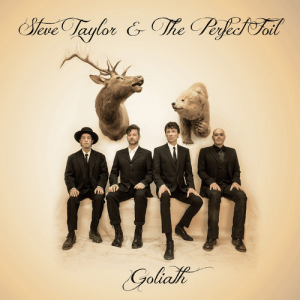


 What’s Best Next Series – Part 8 What’s Best Next: How the Gospel Transforms The Way You Get Things Done by Matt Perman

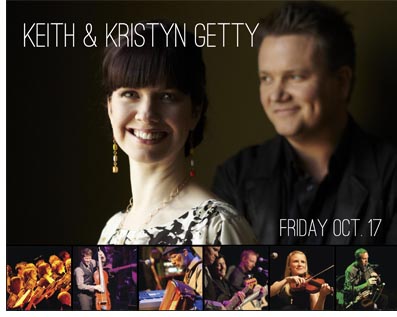

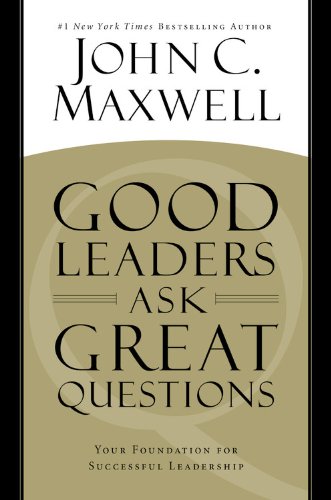


 What’s Best Next Series – Part 7