


Legacy from Christ: What’s My Message by Robert Smart. WestBow Press. 108 pages. 2017
****
This is the fourth, and final, book in the author’s (my longtime pastor) series on the seasons of spiritual formation. He has taught the information from this series in classes to thousands of people over the past several years, and continues to do so.
He tells us that the Christian in his or her final season of spiritual formation – legacy from Christ – is a blessed person, and their influence is greater than ever before. This season is designed to shape us into the glorious likeness of Jesus Christ. It will sufficiently prepare us to leave this earth with a message and a benediction, and to enter eternity in heaven and the new earth. The spiritual formation season of legacy is the best season to speak the message God has given you. This is a season of life to reflect and clarify how we may speak well of others’ futures, express our lives’ messages, and prepare our final wills and testaments.
Click on ‘Continue reading’ for:
BOOK REVIEWS ~ More of this review…
BOOK NEWS ~ Links to Interesting Articles
BOOK CLUB ~ Truths We Confess by R.C. Sproul
I’M CURRENTLY READING….
The author writes that there are challenges that face us, but the main one in the season of legacy is how to suffer well. Suffering well begins with good theology and the gospel. We must speak the gospel to others and ourselves in the midst of suffering and old age. We must offer messages of gospel hope and wait patiently for the Lord to bring us through our afflictions. Suffering believers seem to have the most powerful messages because they persevere with hope. On the other hand, the greatest privilege of this spiritual formation season is being the influential sage (wise old person), that you are.
The book includes helpful discussion questions at the end of each chapter in order to help each person discover and write out a sense of one’s legacy from Christ in this last season of spiritual formation. The goal is that by the end, each person can use the template provided in the last chapter to write out what his or her final message from Christ on to the next generation.
Among the topics included in this book are the aging process, time, inheritance, suffering well, benedictions, a will, last words or testament, and how we die.
The key question in this season of spiritual formation is this: what’s my message? The author tells us that for the believer, the best is yet to come. The book includes an Appendix, which includes the templates used for the first three seasons of spiritual formation.
Here are a few quotes that I appreciated from the book:
- The Bible declares that a life lived well into old age is good.
- Old age is more than a blessing for us; it is a season to stretch out our hands to bless the younger ones, to give an inheritance, and to pass on the gospel through our life’s story.
- What God expects from us is faithfulness. We cannot convert others, but we can live a life of faithfulness and prayer mixed with the message of the gospel.
- Parents and grandparents have the esteemed privilege from God to bless their children and grandchildren, and often they may not see the effect of their endeavors. Therefore, benedictions are given by faith.
- After we die, our life and words on earth still speaks. Our life’s message stays with those we knew and loved. We should make sure that they believe that heaven is gain.

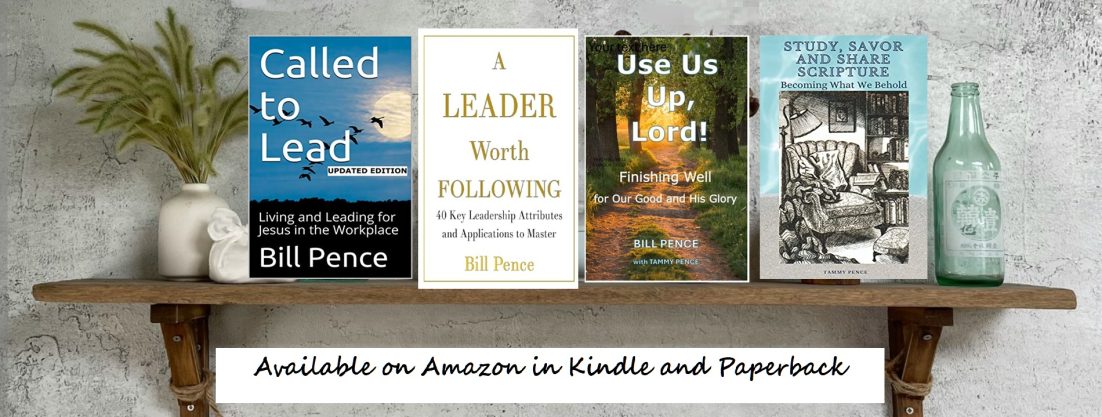
- lStudy, Savor and Share Scripture: Becoming What We Behold. My wife Tammy has published a book about HOW to study the Bible. The book is available on Amazon in both a Kindle and paperback edition. She writes “Maybe you have read the Bible but want to dig deeper and know God and know yourself better. Throughout the book I use the analogy of making a quilt to show how the Bible is telling one big story about what God is doing in the world through Christ. Quilting takes much patience and precision, just like studying the Bible, but the end result is well worth it.”
 Won’t you read along with us?
We are reading through Truths We Confess: A Systematic Exposition of the Westminster Confession of Faith by R.C. Sproul. From the Ligonier description:
 “The Westminster Confession of Faith is one of the most precise and comprehensive statements of biblical Christianity, and it is treasured by believers around the world. R.C. Sproul has called it one of the most important confessions of faith ever penned, and it has helped generations of Christians understand and defend what they believe.
In Truths We Confess, Dr. Sproul introduces readers to this remarkable confession, explaining its insights and applying them to modern life. In his signature easy-to-understand style and with his conviction that everyone’s a theologian, he provides valuable commentary that will serve churches and individual Christians as they strive to better understand the eternal truths of Scripture. As he walks through the confession line by line, Dr. Sproul shows how the doctrines of the Bible—from creation to covenant, sin to salvation—fit together to the glory of God. This accessible volume is designed to help you deepen your knowledge of God’s Word and answer the question, What do you believe?”
This week we look at WCF 25: Of the Church. Here are a few helpful quotes from the chapter:
- The invisible church exists substantially within the visible church but cannot be identified with it. It refers to the elect, to those who make genuine professions of faith.
- According to the Bible, the only people who seek after God are believers. We do not and cannot begin to seek after God until He has found us and brought us to Himself.
- Unbelievers seek the benefits that only God can give them but they aren’t seeking God.
- Our worship is for Christians and should be designed to enhance the growth and the development of the believer.
- The church can become impure if it crosses the line into apostasy. Then the believer not only may leave but must leave. We are not to be visibly identified with an apostate body.
- Some theologians today refuse to say that justification by faith alone is essential to the gospel. Luther said it was the article upon which the church stands or falls.
- Without the gospel, there is no church. There can be a religious institution, but without the gospel, it is no church.

