

 The Daring Heart of David Livingstone: Exile, African Slavery, and the Publicity Stunt That Saved Millions by Jay Milbrandt. Thomas Nelson. 262 pages. 2014
***
The author tells us that if David Livingstone pursued one purpose, it was freedom from the African slave trade. Just thirty-six days after passing away deep in the heart of Africa, legislation in Zanzibar would make slavery illegal in East Africa. Yet Livingstone would die believing that he failed in almost everything in life. For abolition, he sacrificed his career, his reputation, his fortune, his wife, his children, and, eventually, his own life.
The author writes that Livingstone was first and foremost, a missionary. While his walk across Africa had had little to do with evangelism, he believed his work ultimately opened routes for the gospel.
The book uses sources to provide us with a detailed account of Livingstone’s travels. His goals ultimately were the end of the East African slave trade and to find the source of the Nile River.
Click on ‘Continue reading’ for:
BOOK REVIEWS ~ More of this review…
BOOK NEWS ~ Links to Interesting Articles
BOOK CLUB ~ Truths We Confess by R.C. Sproul
I’M CURRENTLY READING….
The book does not portray Livingstone as a good leader early on. Unaccustomed to working in teams, he lacked interpersonal leadership skills. He would at times go weeks without talking to others. When he traveled alone, however, he pressed ahead at a tenacious pace. That strategy made him a successful explorer, a leg up over other explorers of his day.
Livingstone would confess to battling depression and have significant health issues on his travels. His wife Mary would change dramatically during a three-year abandonment in South Africa. The dowdy, quiet housewife became a coarse and vulgar woman, and an alcoholic. She came to resent her husband’s sense of religious call to Africa. Most troubling to Livingstone, he feared Mary had given up her Christian faith. Africa, it seemed, had completely devastated her. Even more than losing his companion, Livingstone feared she might pass away rejecting God.
After the death of Mary, Livingstone changed from the gruff, demanding expedition leader. He began showing more compassion, conversing more often with his team, and became generally more congenial.
For a time, based on supposed eye witness accounts, the world was under the impression that Livingstone had been killed. But he was actually lost, not dead.
Finding the source of the Nile now consumed him. The quest for glory captivated him. Henry Morton Stanley pursued the whereabouts of the explorer, eventually finding him and letting the world know he was alive.
Eventually illness would catch up with Livingstone, and he died May 1, 1873. His heart was buried in Africa and his body returned to England, where he was mourned. And barely one month after Livingstone’s death, the great Zanzibar slave market closed forever.
The question of the source of the Nile remains unanswered to this day.
This is a well-written and detailed account of Livingstone’s travels in Africa. The book also includes helpful study questions.

- How to Read More Books. Gavin Ortlund shares five strategies for reading more books.
- The Gospel Coalition 2024 Book Awards. Here are twenty-two books the Gospel Coalition recommends as helpful resources for the church and for individual believers.
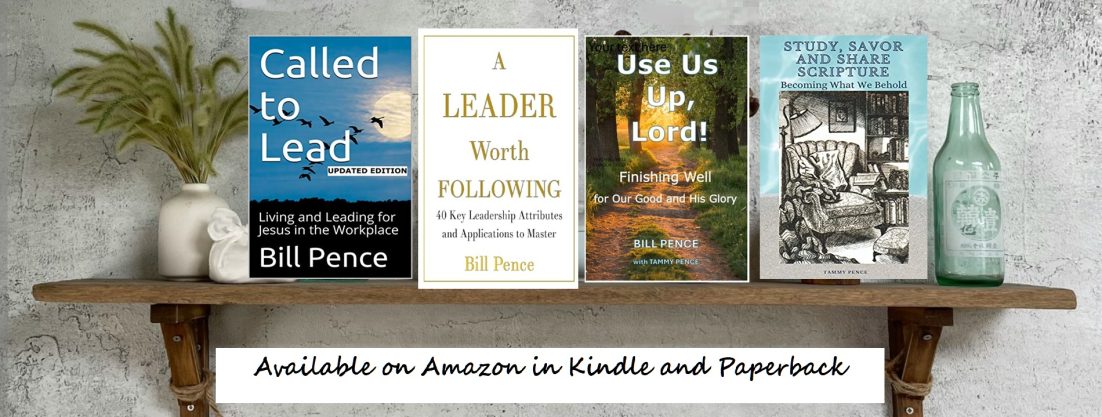
- Study, Savor and Share Scripture: Becoming What We Behold. My wife Tammy has published a book about HOW to study the Bible. The book is available on Amazon in both a Kindle and paperback edition. She writes “Maybe you have read the Bible but want to dig deeper and know God and know yourself better. Throughout the book I use the analogy of making a quilt to show how the Bible is telling one big story about what God is doing in the world through Christ. Quilting takes much patience and precision, just like studying the Bible, but the end result is well worth it.”
 Won’t you read along with us?
We are reading through Truths We Confess: A Systematic Exposition of the Westminster Confession of Faith by R.C. Sproul. From the Ligonier description:
 “The Westminster Confession of Faith is one of the most precise and comprehensive statements of biblical Christianity, and it is treasured by believers around the world. R.C. Sproul has called it one of the most important confessions of faith ever penned, and it has helped generations of Christians understand and defend what they believe.
In Truths We Confess, Dr. Sproul introduces readers to this remarkable confession, explaining its insights and applying them to modern life. In his signature easy-to-understand style and with his conviction that everyone’s a theologian, he provides valuable commentary that will serve churches and individual Christians as they strive to better understand the eternal truths of Scripture. As he walks through the confession line by line, Dr. Sproul shows how the doctrines of the Bible—from creation to covenant, sin to salvation—fit together to the glory of God. This accessible volume is designed to help you deepen your knowledge of God’s Word and answer the question, What do you believe?”
This week we look at WCF 22: Of Lawful Oaths and Vows. Here are a few helpful quotes from the chapter:
- The reason we have oaths and vows is that all people are liars. Romans 3:4 says so.
- It matters whether we keep our vows, because to keep a vow is to honor the truth.
- To make true statements in our testimony is not only to honor our fellow neighbor, but also to honor God, who is the fountain and source of all truth.

