


What a Fool Believes: A Memoir by Michael McDonald with Paul Reiser. Dey Street Books. 323 pages. 2024
****
This book, well written with Paul Reiser, is a fascinating look at seventy-two-year-old musician Michael McDonald’s life. It takes us from his Irish Catholic upbringing in the St. Louis area, through his musical career, right up to the current day once again touring with the Doobie Brothers.
He writes a lot about his father, also a singer, who he says would always be a larger-than-life hero to him. During McDonald’s early years, many times, his father would leave the home, with Michael not knowing if he would return. Sadly, his parent’s marriage would not last, ending when he was about thirteen, though they would become better friends than they were when married.
It was with a homemade guitar at the age of twelve, and inspired by the British Invasion groups, he would start his first band: Mike and the Majestics. He would go on to be a part of many other bands in the St. Louis area as time went on.
Click on ‘Continue reading’ for:
BOOK REVIEWS ~ More of this review…
BOOK NEWS ~ Links to Interesting Articles
BOOK CLUB ~ Truths We Confess by R.C. Sproul
I’M CURRENTLY READING….
He writes of getting his girlfriend pregnant when they were in the eighth grade. The baby would be put up for adoption.
He writes openly about his faults, indicating that disappearing became his norm, distancing himself from whatever it was that might require accountability. He hated school with a passion and began smoking pot, indicating that drugs were the answer to his lack of confidence and constant state of anxiety.
He writes of recording a demo at a small recording studio in nearby Pekin, Illinois and in May 1970, playing a Memorial Day weekend extravaganza near Heyworth, Illinois, billed as the “Incident at Kickapoo Creek.”
Before his senior year of high school, he left for California and a record contract with RCA. Unfortunately, the album he recorded was scrapped and he was dropped from the label. During this time, he had low self-esteem, was regularly taking drugs and drinking alcohol.
He would get a break to work with Steely Dan, which was his favorite group since the Beatles. When Steely Dan stopped touring to become a studio band, McDonald filled a temporary need the Doobie Brothers had for keyboards and vocals. After recording a few albums with the Doobie Brothers, with none of the original members still involved, the band broke up.
He writes of producing future wife Amy’s album. After they were married, he writes of wallowing in the depths of despair. His life had already become an endless cycle of substance abuse. Amy decided to admit herself into a thirty-day drug and alcohol treatment facility. McDonald writes of showing up drunk to a rehab support group for Amy, and a story that would change his life.
He writes of experiencing a profound spiritual shift of sorts, unrelated to any religious upbringing he had experienced to date, and that he has come to trust in a higher power, mostly through fellowship with people who know his story by way of their own experience. He states that when this power greater than himself makes a point to get his attention, he is reminded that he can trust it with the outcome of everything that happens to him from now on, like it or not. He tells us that from that day on, by the grace of God, he has never had another drink.
He and Amy would have two children – Dylan and Scarlett – move to Nashville for a period of time before moving back to California. Amy would battle breast cancer and a radical treatment she endured nearly thirty years ago, and has been given a clean bill of health.
After the Doobie Brothers broke up, McDonald would go on to have a successful solo career. McDonald views his greatest success being his kids, witnessing their growth into kindhearted, empathetic adults.
This is a well-written book that I thoroughly enjoyed and did not want to put down, reading it in just a few days. It ends with McDonald’s discography and photos from his life. The book does include adult language sprinkled throughout.

- Elisabeth Elliot, the Valiant. Trevin Wax reviews Elisabeth Elliot: A Life by Lucy Austen. He writes “Elisabeth Elliot’s story reminds me of the importance of grappling with mystery and certainty, the realization that the more we know, the more we see there’s more to know. Here is a portrait of a valiant woman who knew her sins but, better yet, knew her Savior.”
- A Critical Look at Critical Theory with Carl Trueman. On this episode of the Life & Books & Everything podcast, Kevin DeYoung visits with Carl Trueman about Trueman’s new book To Change All Worlds: Critical Theory from Marx to Marcuse.
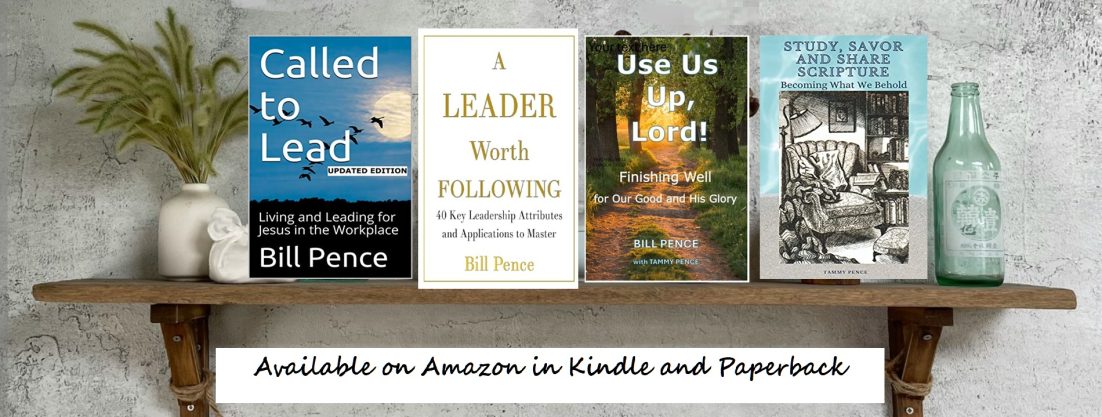
- Study, Savor and Share Scripture: Becoming What We Behold. My wife Tammy has published a book about HOW to study the Bible. The book is available on Amazon in both a Kindle and paperback edition. She writes “Maybe you have read the Bible but want to dig deeper and know God and know yourself better. Throughout the book I use the analogy of making a quilt to show how the Bible is telling one big story about what God is doing in the world through Christ. Quilting takes much patience and precision, just like studying the Bible, but the end result is well worth it.”
- A Daily Diet of Doctrine. Tim Challies reviews Kevin DeYoung’s new book Daily Doctrine: A One-Year Guide to Systematic Theology. He writes “I gladly commend it to you. It will help you learn what Christians believe, it will help you remember what Christians believe, and in that way, it will grow your love for the Lord and your ability to serve him with faithfulness.”
- The Connecting Podcast: Tim Challies. Tim Challies joins Paul Tripp on The Connecting Podcast to talk about his new book Pilgrim Prayers: Devotional Poems That Awaken Your Heart to the Goodness, Greatness, and Glory of God.
 Won’t you read along with us?
We are reading through Truths We Confess: A Systematic Exposition of the Westminster Confession of Faith by R.C. Sproul. From the Ligonier description:
 “The Westminster Confession of Faith is one of the most precise and comprehensive statements of biblical Christianity, and it is treasured by believers around the world. R.C. Sproul has called it one of the most important confessions of faith ever penned, and it has helped generations of Christians understand and defend what they believe.
In Truths We Confess, Dr. Sproul introduces readers to this remarkable confession, explaining its insights and applying them to modern life. In his signature easy-to-understand style and with his conviction that everyone’s a theologian, he provides valuable commentary that will serve churches and individual Christians as they strive to better understand the eternal truths of Scripture. As he walks through the confession line by line, Dr. Sproul shows how the doctrines of the Bible—from creation to covenant, sin to salvation—fit together to the glory of God. This accessible volume is designed to help you deepen your knowledge of God’s Word and answer the question, What do you believe?”
This week we look at the first half of WCF 20: Of Christian Liberty, and Liberty of Conscience. Here are a few helpful quotes from this section of the chapter:
- There is a distinction between eternal guilt and temporal guilt. The eternal guilt was taken for us by Christ on the cross, but we are still left with temporal guilt.
- People who do not know the law and how it condemns them to the wrath of God cannot get excited about a gospel that frees them from that wrath.
- A God without wrath is not God. The biblical God promises to pour out His wrath with a vengeance against an impenitent, rebellious world. That day has been fixed, and we will all be there.
- Either we will face the wrath of God on our own or we will be dressed in the robes of Christ, who has received that wrath for us.
- It is hard to see how anyone can read the Bible and not see that God is indeed a God who will punish wickedness.
- The consequence of the condemning wrath of God for those who are still in their sins is everlasting damnation or hell. But death, the grave, and hell have no claim on those who have been set free by Christ.
- People were saved the same way in the Old Testament as they are saved in the New Testament. They were justified by faith.
- The ground of Abraham’s salvation was Christ. Abraham believed in the One who was promised to come, and he was justified by faith in Him and on the basis of what He would do. The only difference between Abraham and us is that Abraham looked ahead to Christ, and we look back. But we both trust in the same Savior.

